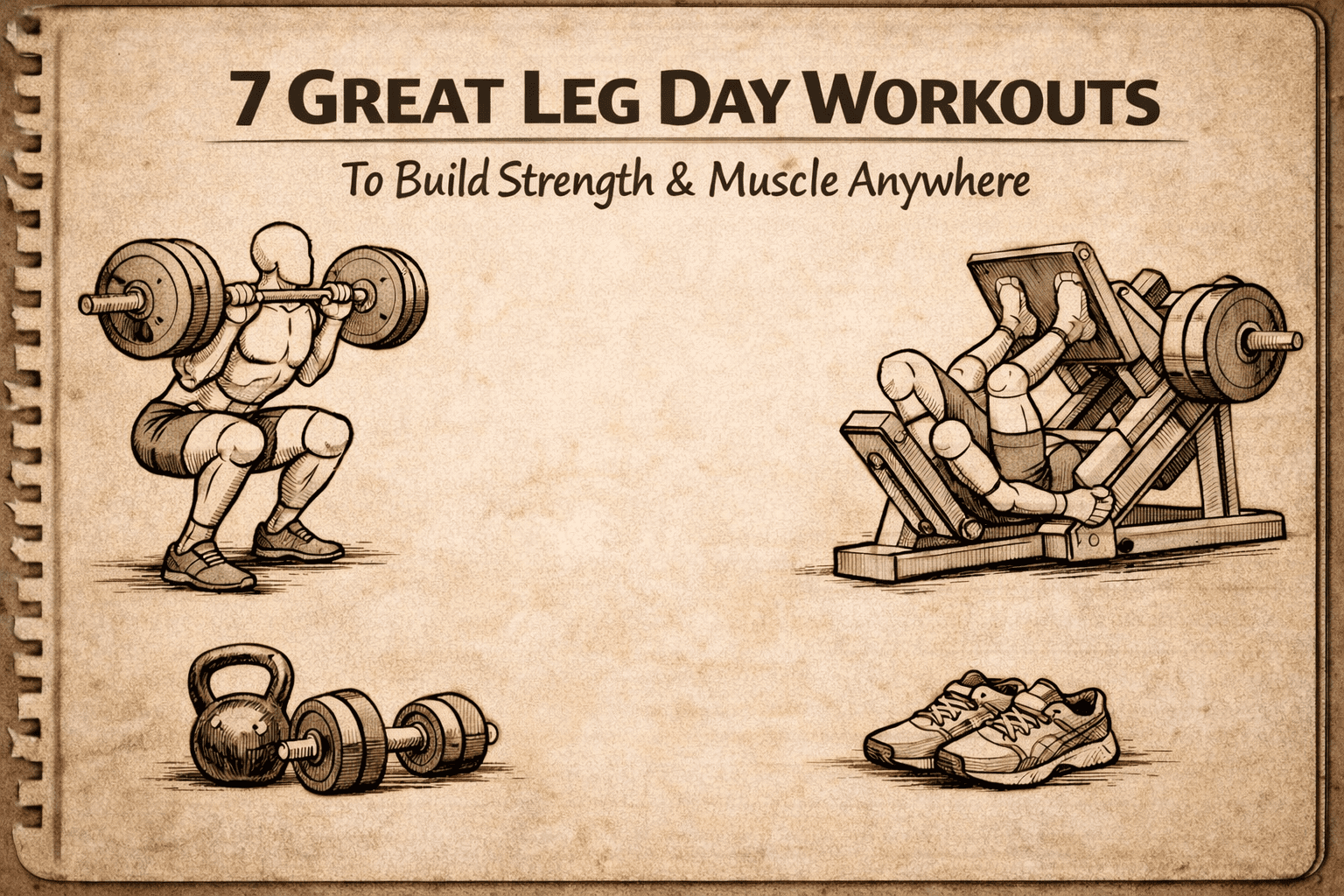
Your legs are either the foundation of the invaluable system that is your body, or your weak link.
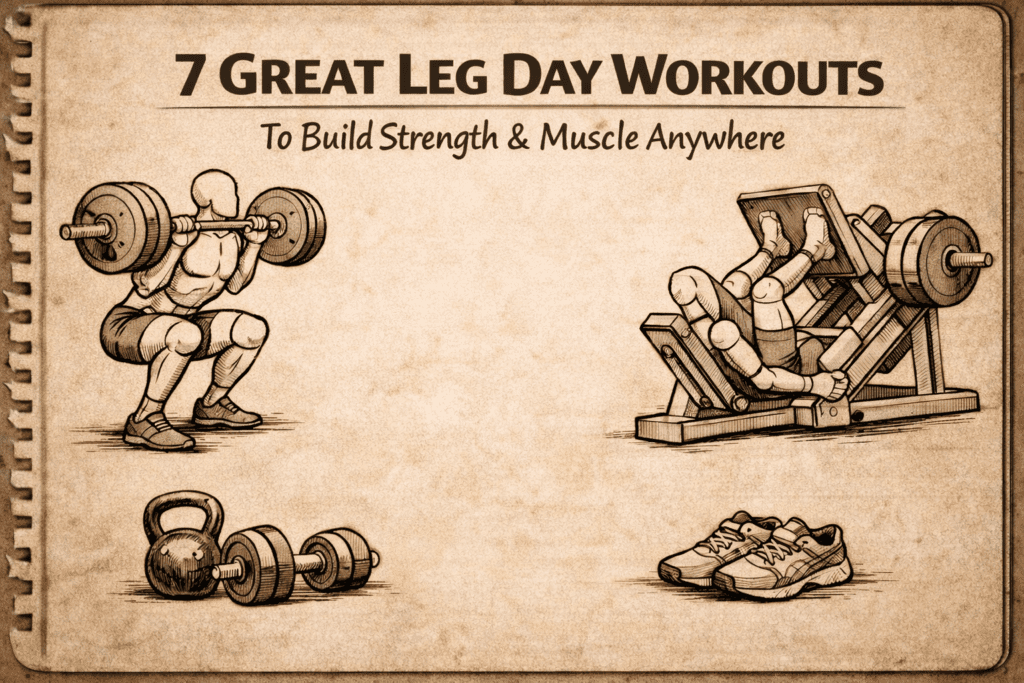
Most guys treat leg day like a box to check. They throw together some squats, maybe add a few lunges, and call it a day. But legs are not a single muscle group you can hammer with one movement and walk away from, and doing wastes so much training and physical potential. Your legs are a complex system of power generators, stabilizers, and shock absorbers that demand intentional, balanced work. You need strength through full ranges of motion, joint integrity, and the kind of conditioning that keeps you moving well into your later decades.
The good news is you do not need a squat rack stacked with coutless iron plates or a gym membership to build legs that perform and last. Whether you have a single kettlebell, an Olympic bar in your garage, or nothing but your bodyweight and some open space, you can build serious leg strength and practical durability anywhere, starting from the ground (your legs) up. The tools matter less than the intent and the structure.
This guide breaks down what makes a good leg day workout, gives you seven complete workouts tailored to different equipment setups, and includes the essential mobility work that most people skip but should never ignore.
Table of Contents
What Makes a Good Leg Day Workout
A good leg workout is not just about burning out your quads or chasing a pump.
It needs to check several boxes to be worth your time and effort. Every session, you should be training for function, longevity, and resilience, not just aesthetics. That means your leg day must hit all (at least most of) the major movement patterns, challenge your muscles through different ranges and tempos, and leave your joints feeling stable and strong, not beat up and creaky.
Here is what separates a mediocre leg session from one that actually builds durable, functional strength:
Multi-Pattern Movement Coverage
Your legs do not just push. They hinge, squat, lunge, rotate, and stabilize. A balanced leg workout includes at least three of these foundational patterns. Skip one consistently and you create imbalances that show up later as pain, weakness, or injury. Think of it like this: if you only ever squat, your posterior chain gets neglected. If you only hinge, your quads stay weak. You need variety that mirrors how your body actually moves in real life.
Bilateral and Unilateral Work
Training both legs at once builds raw strength. Training one leg at a time exposes and fixes imbalances, builds stability, and mimics real-world movement more closely. You walk, run, and climb on one leg at a time. Your training should reflect that. A solid leg day includes both. Bilateral moves like squats and deadlifts load the system heavily. Unilateral moves like split squats and single-leg RDLs teach control and balance.
Full Range of Motion
Half reps build half strength. Your muscles, tendons, and joints all adapt best when you train them through their full available range. That means squatting below parallel when you can, hinging until you feel a deep stretch in your hamstrings, and lunging low enough to challenge end-range stability. Full ROM builds mobility as you strengthen, which is the foundation of durable movement as you age.
Progressive Load or Intensity
Your body adapts to stress. If the stress stays the same, adaptation stops. That means you need to progressively add load, increase reps, shorten rest periods, or increase time under tension over time. You do not need to add weight every week, but you do need a plan to make each session slightly more challenging than the last. Without progression, you are just maintaining.
Joint-Friendly Execution
Training hard does not mean training reckless. Good leg work respects your knees, hips, and ankles. That means controlling your descent, avoiding knee valgus (knees caving in), keeping your spine neutral, and not forcing positions your body is not ready for. You are building a body that lasts decades, not chasing a PR that leaves you limping for weeks.
A good leg day leaves you stronger, not damaged. It challenges your muscles, sharpens your movement quality, and sets you up to train again in a few days without needing a week to recover.
How Often Should You Train Legs
Frequency matters more than most people think.
The old bodybuilding split of hitting legs once a week and limping around for the next five days is not optimal for strength, function, or longevity. Your legs are built to be used often. They recover faster than you think, especially when you manage volume and intensity intelligently.
Twice per week is the sweet spot for most people. This allows you to spread volume across two sessions, hit different movement patterns or intensities each day, and recover fully between sessions. You might do a heavy barbell day and a bodyweight conditioning day. Or a kettlebell strength session and a unilateral stability session. The variety keeps you fresh and builds well-rounded leg development.
Three times per week works if you dial back volume per session. This is great for those who prefer shorter, more frequent training bouts or who want to prioritize leg strength and conditioning. You will need to manage fatigue carefully and avoid going to failure every session. Think of it as spreading your weekly work across more days with less intensity per session.
Once per week is the bare minimum. It will maintain what you have and provide some stimulus, but it is not enough to drive meaningful adaptation or build the kind of leg strength and durability that supports an active, outdoor-focused lifestyle. If once a week is all you can manage, make it count with high-quality, high-effort work.
Recovery between sessions should include movement, not total rest. Walk, ruck, stretch, or do light mobility work on off days. Your legs are designed to move daily. Sitting still actually slows recovery.
Good Leg Day Workouts for any gym (or home gym) setup
Workout 1: Olympic Bar Only leg workout
An empty barbell is one of the most underrated training tools on the planet.
Most people think they need to load up plates to make a bar workout worthwhile. Wrong. An Olympic bar alone weighs 45 pounds and allows for dozens of movement variations that challenge stability, coordination, and time under tension. If you have access to a bar and some space, you have everything you need for a brutal, effective leg session.
This workout uses only the bar. No plates. No attachments. Just you, 45 pounds of steel, and the discipline to move with control and intent.
The Workout:
- Barbell Back Squat (Tempo 3-1-1): 4 sets of 10 reps. Lower for three seconds, pause for one second at the bottom, drive up in one second. The slow eccentric loads your muscles under tension and builds strength in the hardest part of the lift.
- Barbell Front-Racked Reverse Lunges: 3 sets of 8 reps per leg. Hold the bar across your front shoulders (front rack position). Step back into a reverse lunge, keeping your torso upright. This lights up your quads, glutes, and core while demanding balance and control.
- Barbell Romanian Deadlift (Tempo 3-1-1): 4 sets of 12 reps. Hinge at the hips, bar traveling down your thighs, until you feel a deep stretch in your hamstrings. Pause, then drive your hips forward to stand. The tempo turns a light bar into a serious hamstring and glute burner.
- Overhead Barbell Walking Lunges: 3 sets of 20 steps total (10 per leg). Press the bar overhead and lock it out. Walk forward in a lunge pattern, keeping the bar stable overhead. This destroys your quads and shoulders while forcing full-body stability and midline control.
- Barbell Goodmornings: 3 sets of 15 reps. Bar across your upper back. Hinge forward at the hips with a slight knee bend, keeping your back flat. This isolates your posterior chain and teaches you to hinge properly under load.
- Barbell Jump Squats: 3 sets of 6 reps. Explosive power finisher. Squat down, then explode up, jumping off the ground while controlling the bar. Land softly and reset. This builds explosive strength and conditions your nervous system.
Rest 90 seconds between sets for strength movements, 60 seconds for lunges and accessory work. The lack of heavy weight is offset by tempo, volume, and full-range movement. Your legs will be screaming by the end, and you will have built real strength and stability without touching a plate.
Workout 2: Dumbbells Only
Dumbbells force balance, expose weaknesses, and allow natural movement paths.
Unlike a barbell, dumbbells do not lock you into a fixed bar path. Each side of your body has to work independently, which reveals and corrects imbalances fast. They are also easier on your joints because your hands, wrists, and shoulders can move freely. If you train at home or in a minimal setup, a pair of dumbbells is one of the best investments you can make.
This session uses a single pair of moderate-weight dumbbells. Choose a weight you can control for 8 to 12 reps on most movements. If you only have light dumbbells, increase reps and slow down tempo.
The Workout:
- Goblet Squats (Tempo 2-0-2): 4 sets of 12 reps. Hold one dumbbell vertically at chest height. Squat deep, elbows tracking inside your knees. Two seconds down, drive up in two seconds. This builds quad and glute strength while opening up your hips.
- Dumbbell Bulgarian Split Squats: 4 sets of 8 reps per leg. Rear foot elevated on a bench or box. Dumbbell in each hand. Drop into a deep lunge, front knee tracking over toes. This is one of the best unilateral leg builders on the planet. It is brutally effective and humbling.
- Dumbbell Romanian Deadlifts: 4 sets of 10 reps. Dumbbells at your sides. Hinge at the hips, pushing your butt back, keeping a slight knee bend. Lower until you feel a stretch in your hamstrings, then drive your hips forward. This hammers your posterior chain and teaches proper hinge mechanics.
- Dumbbell Lateral Lunges: 3 sets of 10 reps per side. Step wide to the side, sit your hips back, and load the working leg. Push back to center and repeat. This hits your adductors, glutes, and builds lateral strength and mobility that most people ignore.
- Single-Leg Dumbbell Deadlifts: 3 sets of 8 reps per leg. Stand on one leg, dumbbell in the opposite hand. Hinge forward, extending your free leg behind you for balance. This builds single-leg strength, posterior chain control, and serious stability.
- Dumbbell Thrusters: 3 sets of 15 reps. Dumbbells at shoulders. Squat down, then explode up and press the dumbbells overhead in one fluid motion. This finisher combines leg drive and shoulder power while spiking your heart rate and conditioning your entire system.
Rest 75 seconds between sets for the heavy hitters, 45 seconds for finishers. Dumbbells demand more stability and coordination than a barbell, so your core and stabilizers will get worked hard alongside your legs. The result is balanced, functional strength that transfers directly to real movement.
Workout 3: Kettlebells Only
Kettlebells are built for ballistic power and full-body integration.
The offset center of mass makes every movement more dynamic and demands more from your grip, core, and stabilizers. Kettlebells are not just for swings. They are incredibly versatile for leg work, especially when you want to combine strength and conditioning in a single session. If you prefer minimalist, outdoor-friendly training, a single kettlebell can deliver a complete leg workout.
This workout uses one or two kettlebells depending on the movement. If you only have one, adjust accordingly and work one side at a time where needed.
The Workout:
- Kettlebell Goblet Squats: 4 sets of 10 reps. Hold the kettlebell by the horns at chest height. Squat deep, keeping your torso upright and elbows inside your knees. This builds squat depth, core stability, and leg strength all at once.
- Kettlebell Swings (Russian Style): 4 sets of 20 reps. Hinge at the hips and swing the kettlebell to shoulder height. This is a posterior chain power builder that also spikes your heart rate and conditions your entire body. The hinge pattern is critical. No squatting the swing.
- Kettlebell Front-Racked Reverse Lunges: 3 sets of 8 reps per leg. Kettlebell held in the rack position on one shoulder. Step back into a reverse lunge. The offset load challenges your core and stability while hammering your legs.
- Single-Leg Kettlebell Deadlifts: 3 sets of 8 reps per leg. Kettlebell in one hand, standing on the opposite leg. Hinge forward, free leg extending behind you. This builds unilateral posterior strength, balance, and hip stability.
- Kettlebell Cossack Squats: 3 sets of 6 reps per side. Hold the kettlebell at chest height. Shift your weight to one side, squatting deep on that leg while straightening the other. This develops deep squat strength, lateral mobility, and adductor flexibility.
- Kettlebell Clean and Front Squat: 4 sets of 6 reps per side. Clean the kettlebell to the rack position, then squat. This combines explosive pulling power with leg strength and teaches you to move dynamically under load.
Rest 60 to 90 seconds depending on the movement. Kettlebells keep your heart rate elevated while building serious leg strength and power. The dynamic nature of the movements makes this workout feel more athletic and less like traditional strength training. Your legs, core, and cardiovascular system all get worked hard.
Workout 4: Bodyweight and Calisthenics Only
Your body is the ultimate training tool.
No equipment means no excuses. Bodyweight leg training is not easier. Done right, it is brutally hard and builds the kind of functional strength, mobility, and control that weighted movements sometimes miss. You can do this workout anywhere: your backyard, a park, a hotel room, the side of a trail. All you need is space and the willingness to suffer a little.
This workout uses only your bodyweight. No bands, no weights, no props. Just you and gravity.
The Workout:
- Pistol Squats (or Assisted Pistols): 4 sets of 5 reps per leg. Stand on one leg, lower into a full squat, then stand back up. If you cannot do full pistols yet, hold onto a post or wall for assistance. This is one of the hardest bodyweight leg movements and builds insane single-leg strength and balance.
- Jump Squats: 4 sets of 10 reps. Squat down, explode up, and jump as high as you can. Land softly and immediately drop into the next rep. This builds explosive power and conditions your legs and lungs simultaneously.
- Walking Lunges: 4 sets of 20 steps total. Step forward into a lunge, back knee nearly touching the ground, then step the back leg through into the next lunge. Keep moving forward. This builds leg endurance, balance, and unilateral strength.
- Single-Leg Romanian Deadlifts (Bodyweight): 3 sets of 10 reps per leg. Stand on one leg, hinge forward at the hips, extending your free leg behind you for balance. Reach toward the ground, then stand back up. This trains your posterior chain, balance, and single-leg stability without any weight.
- Bulgarian Split Squats (Bodyweight): 3 sets of 12 reps per leg. Rear foot elevated on a low bench, step, or curb. Drop into a deep lunge. No weight needed. Your bodyweight is plenty when you go deep and control the tempo.
- Broad Jumps: 3 sets of 8 reps. Squat down, swing your arms, and jump forward as far as you can. Land softly in a squat and reset. This builds explosive hip power and teaches you to absorb force through your legs.
- Wall Sit Hold: 2 sets of 60 seconds. Back against a wall, slide down until your thighs are parallel to the ground. Hold. This finisher builds isometric quad strength and mental toughness.
Rest 60 seconds between sets for strength movements, 45 seconds for explosive movements. Bodyweight training forces you to master your own movement and builds a foundation of control and stability that carries over to everything else. It is humbling, effective, and requires zero gear.
Workout 5: Hybrid Minimal Gear
Sometimes you have a mix of tools and want to use them all intelligently.
This workout combines a barbell, a kettlebell, and bodyweight movements into one cohesive session. The variety keeps things interesting and allows you to hit different strength qualities and movement patterns in a single session. It is perfect for a home gym setup or a garage with minimal equipment.
You will need an Olympic bar (with or without plates), one kettlebell, and some open floor space.
The Workout:
- Barbell Front Squats: 4 sets of 6 reps. Bar in the front rack position across your shoulders. Squat deep, keeping your torso upright. This builds quad strength and challenges your core and upper back stability.
- Kettlebell Swings: 4 sets of 15 reps. Explosive hip hinge. Swing the kettlebell to eye level. This works your posterior chain and adds a conditioning element to the session.
- Barbell Romanian Deadlifts: 3 sets of 10 reps. Focus on the hinge, keeping the bar close to your body. Stretch your hamstrings at the bottom, then drive your hips forward to stand. This builds posterior strength and reinforces proper hinge mechanics.
- Bodyweight Bulgarian Split Squats: 3 sets of 10 reps per leg. Rear foot elevated. No added weight. Control the descent and drive powerfully back up. This builds unilateral leg strength and balance.
- Kettlebell Goblet Squats: 3 sets of 12 reps. Hold the kettlebell at chest height. Squat deep and slow. This adds volume to your squat pattern and reinforces good positioning.
- Broad Jumps: 3 sets of 6 reps. Explosive finisher. Jump forward as far as possible, landing softly in a squat. This builds power and trains your nervous system to fire fast.
Rest 90 seconds between heavy barbell sets, 60 seconds for kettlebell and bodyweight work. This hybrid approach gives you the benefits of multiple training tools in one session and keeps your body guessing. You get strength, power, stability, and conditioning all in one shot.
Workout 6: Rucking-Focused Leg Strength
Rucking is walking or hiking with weight on your back.
It is one of the most functional forms of leg conditioning you can do. It builds endurance, strengthens your legs under load, and mimics real-world movement better than most gym exercises. But rucking alone is not enough to build maximum leg strength. This workout combines loaded carries and ruck-specific movements with bodyweight strength work to build legs that can handle miles of rough terrain.
You will need a rucksack loaded with 20 to 40 pounds (adjust based on your fitness level) and some open space.
The Workout:
- Ruck March: 10 minutes at a steady, aggressive pace. Wear your loaded ruck and walk with purpose. Keep your posture tall and your stride strong. This warms up your legs, core, and cardiovascular system.
- Bodyweight Squats (Wearing Ruck): 4 sets of 15 reps. The added load from the ruck increases the challenge without needing a barbell. Squat deep and control the movement.
- Ruck Lunges: 3 sets of 10 reps per leg. Step forward into a lunge while wearing your ruck. The instability of the load on your back forces your core and stabilizers to work overtime.
- Step-Ups (Wearing Ruck): 4 sets of 8 reps per leg. Find a bench, box, or sturdy elevated surface. Step up onto it, driving through your heel. Step back down and repeat. This builds unilateral leg strength and mimics the demands of hiking uphill.
- Single-Leg Deadlifts (Bodyweight, Wearing Ruck): 3 sets of 8 reps per leg. The ruck adds load to the movement while forcing balance and posterior chain engagement. Hinge forward on one leg, free leg extending behind you.
- Ruck March Finisher: 10 minutes at a faster pace than your warmup. Push the pace and focus on maintaining good posture and strong strides even as fatigue sets in.
Rest 60 seconds between sets. Rucking-based leg work is incredibly functional and prepares your body for real-world demands like hiking, carrying gear, and moving under load for extended periods. It is low-tech, high-return training that builds durability and endurance.
Workout 7: High-Intensity Bodyweight Leg HIIT
Sometimes you need to light your legs on fire and test your conditioning.
This workout is fast, brutal, and effective. It combines explosive movements, isometric holds, and high-rep bodyweight exercises into a high-intensity circuit that builds leg strength, power, and cardiovascular capacity all at once. No equipment needed. Just you, a timer, and the willingness to push through discomfort.
This is an EMOM (Every Minute on the Minute) style workout. At the start of each minute, perform the prescribed reps, then rest for whatever time is left in that minute. Repeat for the prescribed rounds.
The Workout (6 Rounds Total):
- Minute 1: 15 Jump Squats
- Minute 2: 10 Pistol Squats (5 per leg, or assisted pistols)
- Minute 3: 20 Alternating Jump Lunges (10 per leg)
- Minute 4: 12 Single-Leg Romanian Deadlifts (6 per leg, bodyweight)
- Minute 5: 30-Second Wall Sit Hold
- Minute 6: 8 Broad Jumps
Complete all six minutes, rest for 2 minutes, then repeat for a total of six rounds (36 minutes total). The rest comes from finishing your reps quickly. The slower you move, the less rest you get. This creates an internal pressure to move with intent and efficiency.
By the end of six rounds, your legs will be cooked, your lungs will be burning, and your heart rate will be through the roof. This style of training builds work capacity, mental toughness, and serious leg conditioning in a short amount of time. It is perfect for days when you are short on time but still want to destroy your legs.
Common Mistakes to Avoid on Leg Day
Even experienced lifters screw up leg day in predictable ways.
Mistakes do not just limit your progress. They increase injury risk, create imbalances, and waste your time. Most of these errors come from ego, impatience, or lack of awareness. Once you know what to watch for, you can avoid them and make every leg session more effective and safer.
Skipping Warm-Ups
Cold muscles and stiff joints do not perform well and are more prone to injury. A proper warmup increases blood flow, activates your nervous system, and prepares your joints for loaded movement. Spend five to ten minutes on dynamic stretches, light cardio, and movement-specific drills before you start your working sets. Jumping straight into heavy squats or explosive jumps is asking for trouble.
Ignoring the Posterior Chain
Most people love quad-dominant movements like squats and lunges. But if you neglect your hamstrings, glutes, and lower back, you create imbalances that lead to knee pain, lower back issues, and weak hip extension. Every leg workout should include at least one hinge-based movement like Romanian deadlifts, swings, or goodmornings. Your posterior chain is your power generator. Train it.
Going Too Heavy Too Soon
Ego lifting is real, especially on leg day. Adding weight before you have mastered the movement pattern leads to compensation, poor form, and eventual injury. Build your strength on a foundation of solid technique. Master bodyweight movements, then add load progressively. Your joints and connective tissues adapt slower than your muscles. Respect that timeline.
Not Training Unilaterally
Bilateral movements like squats and deadlifts are essential, but if that is all you do, you will develop imbalances. One leg is always stronger or more coordinated than the other. Unilateral work like split squats, single-leg deadlifts, and pistol squats expose and fix those differences. They also build stability and balance that transfers directly to real-world movement.
Skipping Full Range of Motion
Quarter squats and half lunges do not build full strength or mobility. Train through the fullest range of motion your body and joints allow. Deep squats build hip and ankle mobility. Full-depth lunges strengthen end-range positions. Partial reps are sometimes useful for specific purposes, but they should not be your default. Go deep, control the movement, and build strength you can actually use.
Neglecting Recovery and Mobility Work
Training breaks your body down. Recovery builds it back up stronger. If you hammer your legs hard but never stretch, mobilize, or manage your recovery, you will hit a wall fast. Your performance will stall, your joints will ache, and your risk of injury skyrockets. Mobility and recovery are not optional. They are part of the training process.
Avoiding these mistakes keeps you training consistently, progressing steadily, and feeling strong instead of beat up. Smart training always wins over hard training in the long run.
Essential Post-Workout Mobility and Stretching
Mobility work after a leg session is not a nice-to-have. It is essential.
Your muscles are warm, your nervous system is still engaged, and your joints have just been loaded through various ranges of motion. This is the perfect time to restore length to tight tissues, improve joint health, and set yourself up for better recovery and performance next session. Skipping this step is like building a house and never maintaining it. Eventually, things start to break down.
Post-workout mobility serves three purposes: it reduces muscle soreness, restores range of motion, and helps your nervous system shift out of high-performance mode into recovery mode. Ten to fifteen minutes after your workout can drastically improve how you feel the next day and how well you perform long-term.
Why Post-Workout Mobility Matters
When you train hard, your muscles contract repeatedly under load. This creates tension and temporary shortening of muscle fibers. If you never lengthen them back out, they stay tight. Over time, this tightness limits your range of motion, alters your movement patterns, and increases injury risk.
Your joints also experience compression and stress during loaded movements. Mobility work helps restore joint spacing, flush out metabolic waste, and improve circulation to the areas you just worked. This speeds recovery and keeps your joints healthy for decades of training.
Your nervous system also benefits. After an intense session, your body is in a heightened state. Controlled breathing and slow, intentional stretching activates your parasympathetic nervous system, signaling to your body that it is time to recover. This improves sleep, reduces cortisol, and helps you feel less wrecked the next day.
Go-To Post-Leg Day Mobility Routine
Perform each movement slowly and with control. Hold static stretches for 45 to 60 seconds per side. Do not bounce or force anything. Breathe deeply and let your body release tension naturally.
- Deep Squat Hold: 90 seconds. Drop into the deepest squat you can manage, feet flat on the ground, elbows pressing your knees out. This opens your hips, stretches your ankles, and decompresses your lower back. If your heels lift, put a small plate or book under them.
- Pigeon Pose (Each Side): 60 seconds per side. From a plank position, bring one knee forward and place it near your opposite wrist, extending your back leg straight behind you. Sink your hips toward the ground. This stretches your glutes, hip flexors, and piriformis. It is uncomfortable but incredibly effective.
- Standing Hamstring Stretch: 60 seconds per side. Place one heel on a low box or bench, keep your leg straight, and hinge forward at the hips. You should feel a deep stretch along the back of your leg. Keep your back flat, do not round your spine.
- Kneeling Hip Flexor Stretch: 60 seconds per side. Kneel on one knee, other foot flat in front of you. Push your hips forward gently while keeping your torso upright. This stretches the hip flexors, which get tight from sitting and squatting. Tight hip flexors limit your squat depth and glute activation.
- 90/90 Hip Stretch: 60 seconds per side. Sit on the ground with one leg bent in front of you at 90 degrees and the other bent behind you at 90 degrees. Sit tall and gently lean forward over your front leg. This mobilizes internal and external hip rotation, which most people lack.
- Calf Stretch Against Wall: 60 seconds per side. Place your hands on a wall, step one foot back, and press your heel into the ground while keeping your back leg straight. Lean into the wall. This stretches your calf and Achilles tendon, both of which take a beating during leg training.
- Supine Figure-Four Stretch: 60 seconds per side. Lie on your back, cross one ankle over the opposite knee, and pull your bottom leg toward your chest. This stretches your glutes and outer hip. It is gentle and effective, especially if pigeon pose is too intense.
- Child’s Pose: 90 seconds. Kneel on the ground, sit your hips back toward your heels, and reach your arms forward, forehead resting on the ground. This decompresses your spine, stretches your lats, and calms your nervous system. It is a perfect way to finish.
This routine takes 12 to 15 minutes. You can do it on a mat, on grass, or on your floor at home. Put on some music, breathe deeply, and let your body relax into each stretch. Do not rush. This is part of the training, not an afterthought.
Consistency with mobility work will keep you moving well, reduce soreness, and extend your training lifespan. Your 50-year-old self will thank you for the time you invest now.
How to Program These Workouts Into Your Week
Having seven workout options is great, but only if you know how to use them.
The key is not to randomly pick a workout each leg day. The key is to structure your week so that you hit different movement patterns, intensities, and tools while allowing adequate recovery. You want variety without chaos, and consistency without monotony.
Here is how to think about it:
If you train legs twice per week, pick one strength-focused session and one conditioning or unilateral-focused session. For example, do the Olympic bar workout on Monday and the bodyweight HIIT circuit on Thursday. Or do the kettlebell workout on Tuesday and the dumbbell workout on Friday. This gives you heavy bilateral work one day and lighter, more dynamic work the other day.
If you train legs three times per week, rotate between strength, power, and conditioning. Monday could be the barbell workout (strength), Wednesday could be the rucking workout (conditioning and endurance), and Friday could be the bodyweight workout (power and control). This spreads different training stimuli across the week and prevents overloading any one movement pattern or energy system.
If you train legs once per week, pick the workout that covers the most ground. The hybrid minimal gear workout or the kettlebell workout both hit multiple movement patterns and provide strength, power, and stability work in one session. Make it count. Go hard, move well, and follow it up with mobility work.
Between leg days, do not sit still. Walk, ruck, stretch, or do light mobility work. Active recovery keeps blood flowing, reduces soreness, and maintains movement quality. Your legs are built to move daily, not just on training days.
Listen to your body. If you are still sore from your last session, either dial back intensity or shift to a different movement pattern. Soreness is feedback, not a badge of honor. Training through excessive soreness leads to poor movement quality, compensation patterns, and eventually injury.
Rotate workouts every few weeks to keep your body adapting. Do not do the same workout for months on end. Your body gets efficient at repeated tasks. Switching tools, rep ranges, and movement patterns keeps your muscles guessing and your progress moving forward.
Nutrition and Recovery Considerations for Leg Training
You do not build strong legs in the gym. You build them in the kitchen and in your sleep.
Training is the stimulus. Recovery is where adaptation happens. If you are hammering your legs twice a week but eating garbage, sleeping five hours a night, and never hydrating properly, your progress will stall. Your legs are large muscle groups that require significant resources to repair and grow. You need to fuel them properly.
Protein Is Non-Negotiable
Your muscles are made of protein. After a hard leg session, your body needs amino acids to repair damaged muscle fibers and build them back stronger. Aim for at least 1.6 to 2.2 grams of protein per kilogram of bodyweight daily. Spread it across multiple meals. Post-workout is a good time to get 25 to 40 grams of high-quality protein into your system. Chicken, fish, eggs, Greek yogurt, and quality protein powder all work.
Carbohydrates Fuel Performance and Recovery
Carbs are not the enemy. They are your primary fuel source for intense training. Your muscles store carbohydrates as glycogen, and leg workouts deplete those stores fast. Refueling with carbs post-workout helps replenish glycogen, speeds recovery, and supports your next training session. Think sweet potatoes, rice, oats, and fruit. Whole food sources are best.
Hydration Impacts Everything
Dehydration kills performance and slows recovery. Your muscles are about 75 percent water. If you are not drinking enough, your strength drops, your endurance tanks, and your recovery drags. Drink water throughout the day, not just during your workout. A good rule of thumb is half your bodyweight in ounces daily, more if you train hard or sweat heavily.
Sleep Is Where You Actually Get Stronger
You do not get stronger during your workout. You get stronger while you sleep. Deep sleep triggers growth hormone release, which drives muscle repair and adaptation. Aim for seven to nine hours per night. Prioritize sleep quality by keeping your room cool, dark, and quiet. Avoid screens an hour before bed. Your legs will recover faster and perform better when you sleep well.
Active Recovery Beats Complete Rest
Lying on the couch for three days after leg day is not optimal recovery. Light movement like walking, easy rucking, yoga, or swimming increases blood flow, reduces soreness, and speeds recovery. Your legs are designed to move daily. Keep them moving, just at a lower intensity.
Nutrition and recovery are not complicated, but they are non-negotiable if you want to keep progressing. Treat them with the same seriousness you treat your training.
Frequently Asked Questions
Here are the most common questions people ask about leg training, along with clear, actionable answers based on what actually works in the real world.
How long should a leg workout take?
Between 45 and 75 minutes, including warmup and mobility work. If you are in and out in 30 minutes, you are probably not doing enough volume or intensity. If you are there for two hours, you are either resting too long or doing too much junk volume. Quality and efficiency matter more than time spent.
Should I train to failure on leg exercises?
Not every set, and not on every movement. Training to failure occasionally can drive adaptation, but doing it every set leads to excessive fatigue, poor form, and longer recovery times. Leave one to two reps in the tank on most working sets. Save failure for isolation movements or the last set of a session if you are going to use it at all.
Can I build strong legs without heavy weights?
Absolutely. Bodyweight training, tempo work, unilateral movements, and high-volume circuits all build serious leg strength and endurance. Heavy weights are one tool, not the only tool. Progressive overload can come from added reps, slower tempos, shorter rest periods, or harder movement variations. Your body does not know how much weight is on the bar. It only knows tension, time under load, and effort.
Why do my knees hurt after leg workouts?
Usually because of poor movement mechanics, lack of mobility, or too much volume too soon. Make sure your knees track over your toes during squats and lunges, not caving inward. Warm up properly. Build volume gradually. Strengthen your glutes and hips, which stabilize your knees. If pain persists, see a professional. Pain is a signal, not something to push through.
Do I need to do cardio on leg day?
Depends on your goals. If you are doing a high-intensity leg circuit like the HIIT workout, you are getting cardio. If you are doing heavy squats and deadlifts, adding more cardio might hurt your recovery. Walking, rucking, or light cycling on off days is smart. Sprinting or running hard right after a brutal leg session is usually overkill unless you are specifically training for that.
How do I know if I am recovering properly between leg sessions?
You should feel ready to train again, not destroyed. Some residual soreness is normal, but if you are still hobbling around three days later, you either went too hard, did not manage recovery well, or need more time between sessions. Track your performance. If your strength and reps are going up or holding steady, you are recovering. If they are dropping, you need more rest or better recovery practices.
Can I do upper body and legs on the same day?
Yes, especially if you are doing full-body training or short, focused sessions. Just manage your total volume and fatigue. A heavy leg day followed by heavy upper body work might be too much for one session. But pairing a moderate leg workout with upper body accessory work is totally fine. Listen to your body and adjust based on how you feel and perform.
These questions come up constantly because people overthink training. Keep it simple. Train hard, recover smart, and stay consistent.
Your legs are your foundation. They carry you through life, support every movement you make, and determine how well you age. Training them is not about chasing aesthetics or hitting arbitrary numbers. It is about building strength, stability, and durability that lasts.
The seven workouts in this guide give you options for every situation. Barbell, dumbbells, kettlebells, bodyweight, rucking, or a mix of tools. Pick what fits your setup and your goals. Rotate them to keep your body adapting. Follow them up with the mobility work that keeps your joints healthy and your movement smooth. Train your legs twice a week, fuel your body properly, sleep well, and stay consistent. That is the formula. Simple, but not easy. Your future self will thank you for the work you put in now.


ABOUT THE AUTHOR
Carlos Grider is a former U.S. Marine, CrossFit Level 1 trainer, certified personal trainer, and the creator of Forge the Flow. After nearly a decade supporting combat operations and special operations in austere environments — and another decade traveling across 65+ countries as a nomad and adventure athlete — Carlos distilled everything he learned about staying strong, capable, and resilient without a gym into the Forge the Flow training system. He has trekked solo to Everest Base Camp, surfed Bali through the pandemic, trained Muay Thai in Thailand, and run self-guided marathons across four continents — all maintained on minimalist training built for real life. He writes about the fitness methods that actually travel.
Click here to learn more about Carlos's story.