
I’ve put more wear on my joints than most orthopedic surgeons see in a career of patients. Two decades of rucking under load – both for “work”, and for fun exploring backcountry mountain ramges. Years of CrossFit met-cons that didn’t care what my knees thought about it. Five years of surfing in a body that was never given a real off-season. Solo trekking to Everest Base Camp twice as fast as recommended on joints that had already logged millioms more steps of impact than average.
For most of that time, “joint maintenance” meant glucosamine, a tub of chondroitin, a dab of Tiger Balm and hoping for the best. It felt like upkeep — like topping off a car that’s slowly leaking oil. You take the supplement, you stretch a little, and you accept that this is just what 40+ feels like if you’ve actually used your body instead of preserving it in a recliner.
Then, recently, I changed my protocol, aiming for a more science backed approach and more specific, targeted results. As a project to get back to an all sport “poly-athlete” build that I could maintain for the next two decades, I aimed to establish permanent fitness targets – with functional, foundational strength being the primary pillar. For most older athletes, the Achilles heel in their ideal “forever fit” program is their Achilles – along with all of the other tendons that hold their joints together.
Recognizing this, in my new program, to not just to maintain but to enhance the joints that will carry me through my next set of adventures I started with a new cocktail for joint repair, and enhancement:
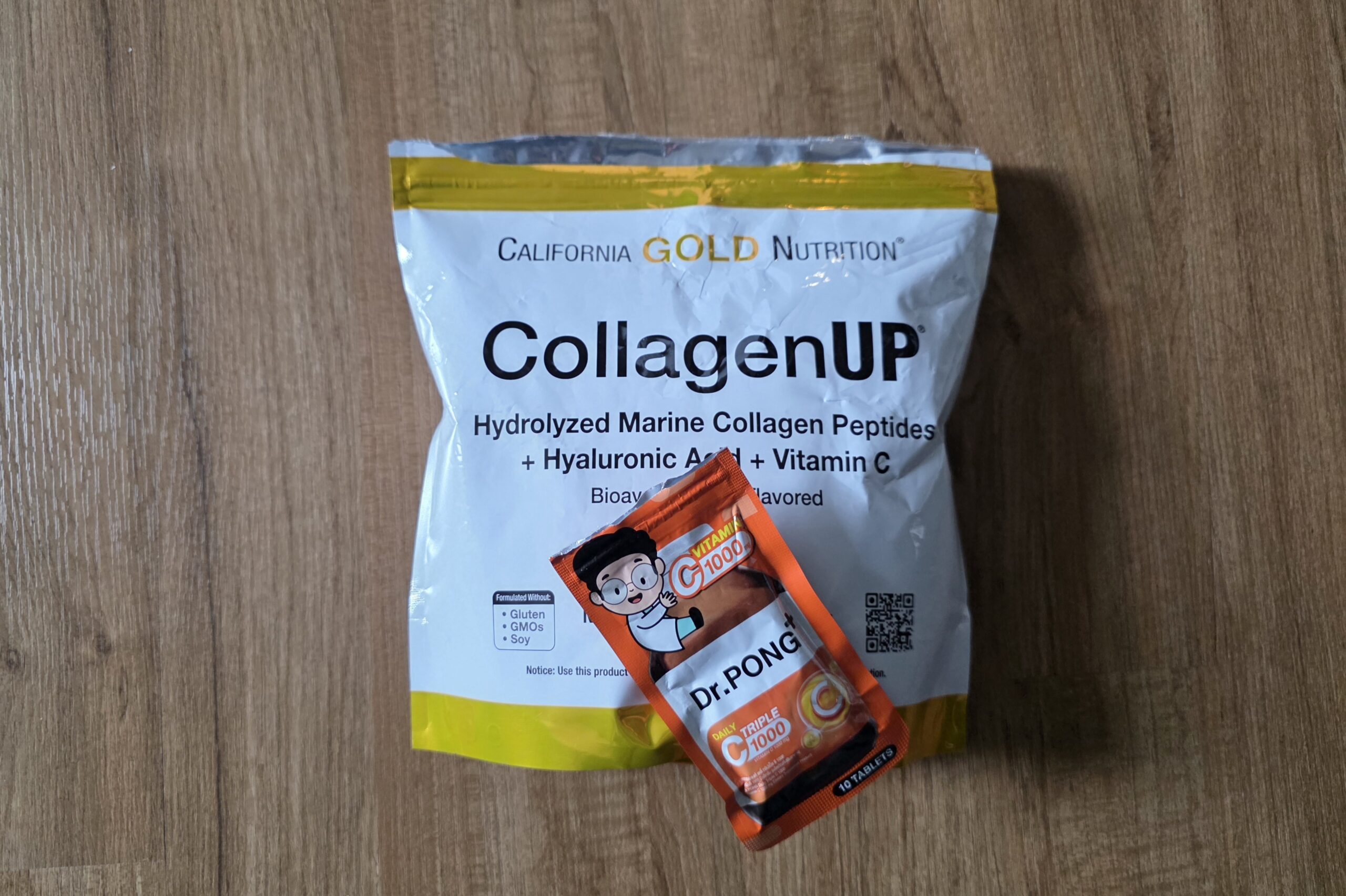
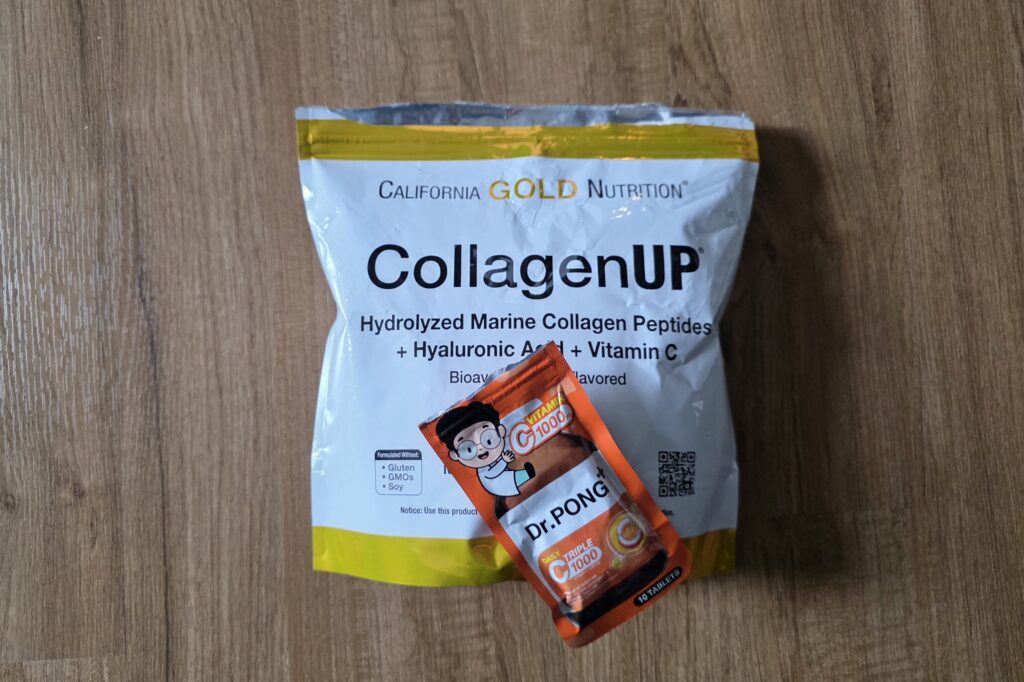
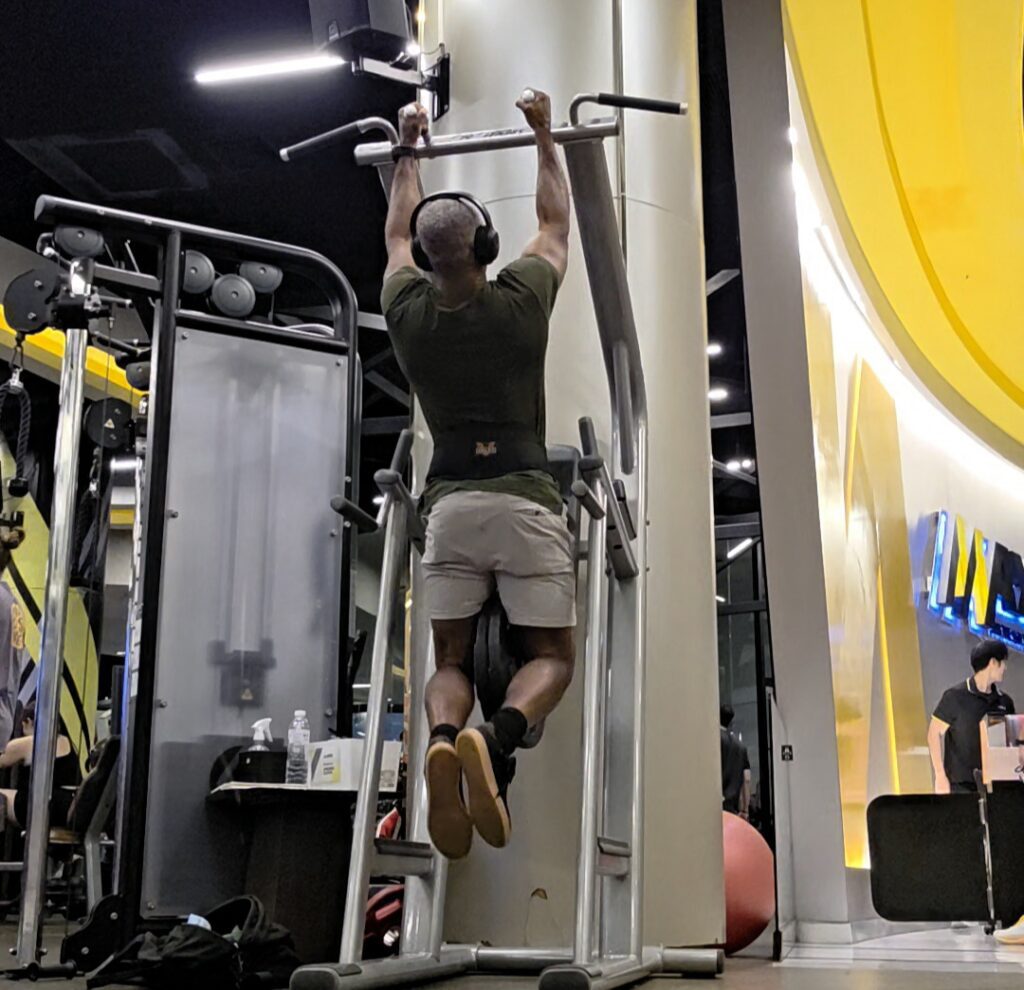
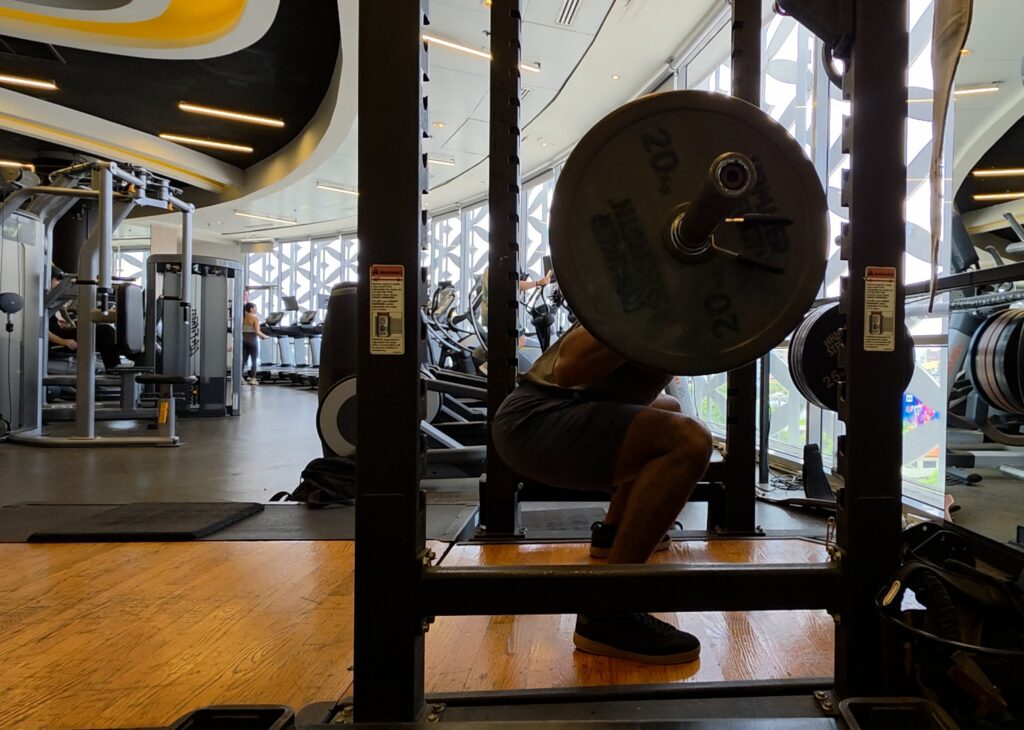
Marine collagen, dosed correctly with food and vitamin C, layered onto a real mobility practice and a strength program built around full-range, end-range strength — currently sitting at a 330 lb (150 kg) squat and a 397 lb (180 kg) deadlift at 42 years old, after a year of calisthenics-only training before that. Add sauna for recovery, and for the first time in 20 years of hard use, my joint and mobility protocol didn’t feel like maintenance. It feels like my knees, elbows, and shoulders are actually being rebuilt.
That’s a strong claim, and you shouldn’t just to take it on faith.
Let’s go through what the actual peer-reviewed research says about why this combination works, why the supplements most people are taking instead don’t have much evidence behind them, and where the real limits of this approach are — because there are limits, and pretending there aren’t is how people get hurt.
The Quiet Failure of Glucosamine and Chondroitin
Before we talk about what works, it’s worth being honest about what doesn’t — because glucosamine and chondroitin sulfate are still the best-selling joint supplements in the world, and the evidence for them just isn’t there.
The most important data point is the Glucosamine/Chondroitin Arthritis Intervention Trial (GAIT), a five-year, $12.5 million study funded by the National Institutes of Health and published in the New England Journal of Medicine in 2006. Researchers randomized 1,583 patients with painful knee osteoarthritis to glucosamine, chondroitin sulfate, the combination, celecoxib (a prescription anti-inflammatory used as a positive control), or placebo. The conclusion was blunt: glucosamine and chondroitin sulfate, alone or combined, did not reduce pain effectively compared to placebo in the overall study population. The supplement groups performed essentially the same as the people taking sugar pills.
A follow-up 24-month radiographic analysis from the same trial group made the structural case even weaker: there was no significant difference in joint space narrowing — the actual physical marker of cartilage loss — between any of the treatment groups and placebo.
This isn’t a fringe finding. It’s the largest, best-funded, most rigorously controlled trial ever run on these two supplements, and it found essentially nothing. The supplement industry has had two decades to produce a trial of similar size and quality that overturns this. It hasn’t happened.
Why doesn’t it work the way the marketing suggests? Oral glucosamine has poor bioavailability — a large fraction is degraded in the GI tract before it’s absorbed, and what does get absorbed doesn’t preferentially accumulate in joint cartilage. The mechanistic story (give the body raw materials, the body builds cartilage) sounds intuitive. It’s also not how human pharmacokinetics actually works for this molecule. Plausible biochemistry and proven clinical outcome are two different things, and for glucosamine/chondroitin, the gap between them is the entire problem.
MSM: Weak Signal, Not Zero, Mostly Irrelevant to Athletes
Methylsulfonylmethane gets lumped in with glucosamine and chondroitin, but it deserves a slightly more careful look, because the evidence isn’t quite as flatly negative.
Several small randomized, placebo-controlled trials in people with diagnosed knee osteoarthritis — not athletes, not healthy adults, people with an actual degenerative joint disease — have shown modest improvements in pain and physical function scores after 12 weeks of MSM supplementation, typically at doses of 3–6 grams daily. A 2023 trial in Japanese adults with mild knee pain found a statistically significant, though small, improvement in a knee-specific quality-of-life score after 12 weeks.
But here’s the result that actually matters if you’re an active person rather than an osteoarthritis patient: a randomized controlled trial specifically testing MSM as a preventative measure in young, healthy military trainees doing high-impact training — the population closest to “athletes trying to bulletproof joints,” not “older adults managing existing OA” — found that 3 grams of MSM daily for 8 weeks did not produce significant improvements in any of five knee outcome subscales compared to placebo.
That’s the honest read: MSM might offer a small benefit if you already have osteoarthritis. It has not been shown to do anything meaningful for an active person trying to prevent joint problems or build connective tissue capacity before damage exists. If you want to experiment with it anyway, it’s cheap and essentially non-toxic. Just don’t mistake “doesn’t seem to hurt” for “doing the heavy lifting” in your joint protocol — and don’t let it replace the things that actually have data behind them.
The Mechanism That Actually Holds Up: Vitamin C as the Rate-Limiting Step in Collagen Synthesis
Here’s where the science gets genuinely interesting, and it has nothing to do with marketing copy on a supplement label.
Collagen is the structural protein that makes up the vast majority of your tendons, ligaments, and cartilage matrix. But collagen isn’t simply assembled the way most proteins are. After the amino acid chain is built, two enzymes — prolyl hydroxylase and lysyl hydroxylase — have to chemically modify specific proline and lysine residues in a step called hydroxylation. This step is what allows the collagen molecule to fold into its stable triple-helix structure. Without it, the molecule is unstable, can’t be properly secreted from the cell, and gets degraded before it ever becomes functional tissue.
Vitamin C is the obligate cofactor for both of those enzymes. No vitamin C, no hydroxylation, no stable collagen — full stop. This isn’t a “may support” claim; it’s basic biochemistry confirmed across decades of research, and it’s the reason scurvy (severe vitamin C deficiency) causes connective tissue to literally fall apart.
The research connecting this directly to collagen supplementation in active people comes from a landmark study by Shaw and colleagues, published in the American Journal of Clinical Nutrition in 2017. Researchers gave healthy young men a vitamin C–enriched gelatin (collagen) supplement and then had them perform a bout of intermittent jumping exercise. The result: collagen synthesis markers roughly doubled compared to gelatin without the timed exercise stimulus, and the effect persisted across 72 hours of monitoring. The accompanying editorial in the same issue specifically noted that the timing — vitamin C and gelatin consumed about an hour before exercise — appeared to be a key part of why it worked: tendons have relatively poor blood flow at rest, and exercise increases the perfusion that delivers those raw materials to the tissue that needs them.
That single mechanistic detail — that the supplement needs to arrive when blood flow to the tendon is elevated — is the entire reason generic “take it whenever” dosing protocols underperform compared to a properly timed one.
Marine Collagen Specifically — Why the Source Matters Less Than the Cofactors
A quick note on marine collagen versus bovine or porcine sources, since that’s what I’m personally taking: marine collagen is predominantly Type I collagen, the same type that makes up the majority of tendon, ligament, and skin tissue (cartilage leans more heavily on Type II). It also tends to have a smaller peptide size, which some research suggests may modestly improve gut absorption compared to larger bovine-derived peptides — though head-to-head human trials on this specific point are still limited, and I want to be honest that the source-comparison literature is thinner than the vitamin C-cofactor literature.
What matters far more than the species the collagen came from is whether you’re actually pairing it with the two things that make it usable: vitamin C, and insulin/food context. A bottle of premium marine collagen taken fasted, without vitamin C, isn’t doing the job it’s capable of doing.
The Glycine Piece Nobody Talks About
Roughly one out of every three amino acids in collagen is glycine. It’s not a trace ingredient — it’s a structural backbone requirement. Research from Vieira and colleagues, cited directly in the Shaw collagen-timing study above, found that increasing glycine intake improved the mechanical properties of healing Achilles tendons in animal models. Most commercial collagen peptide products already contain meaningful glycine as part of their amino acid profile, which is part of why collagen supplementation specifically — rather than a generic whey or plant protein — has a plausible mechanistic edge for connective tissue work. If you’re not getting adequate glycine from your collagen dose or diet, you’re short one of the literal building blocks of the molecule you’re trying to build.
Why None of This Matters If You’re Sedentary
This is the part of the article that the supplement industry will never put on a label, because it doesn’t sell more bottles: collagen and vitamin C are raw materials, not a construction crew.
The body builds and remodels tendon tissue in direct response to mechanical loading. This is not a metaphor — it’s a well-documented physiological process called mechanotransduction. When a tendon is loaded, fibroblast cells embedded in the tissue (connected to the surrounding matrix via integrin receptors) physically sense that load and convert it into an intracellular signal that upregulates collagen gene expression and protein synthesis. Research from Kjaer, Magnusson, and colleagues at the University of Copenhagen — some of the most cited names in human tendon physiology — has shown directly that collagen synthesis and turnover in tendon tissue increases with both acute and chronic mechanical loading, and that habitual, progressive loading produces measurable tendon hypertrophy and increased stiffness over time. A related study from the same research group found that exercise specifically increases glucose uptake into the Achilles tendon — direct evidence that physical activity is what opens the door for nutrients to actually get used by the tissue.
Translate that into plain language: your body doesn’t build tendon capacity because you fed it collagen. It builds tendon capacity because you loaded a tendon, and then you fed it the materials it needed to respond to that load. The order of operations matters. Collagen without loading is raw material with no construction project to use it on. The amino acids get metabolized for energy or general protein turnover elsewhere in the body, not preferentially routed into idle tendon tissue that has no signal telling it to remodel.
This is precisely why a structured mobility and strength program isn’t an optional add-on to this protocol — it’s the actual demand signal that makes the nutrition meaningful. In my own training, that means:
- Increasing range of motion through dedicated mobility work, so joints have access to their full physiological range, not just the narrow range that daily life and habitual movement patterns reinforce
- Building strength at end range — not just in the comfortable middle of a movement, but in the lengthened and shortened positions where most untrained connective tissue is weakest and most injury-prone
- Creating natural muscular and strength balance across opposing muscle groups, so one side of a joint isn’t compensating for chronic underdevelopment on the other side
- Internalizing healthy movement and positioning as default patterns, not something you have to consciously think about under load
That last point is the one I’d underline hardest from my own military background: the goal was never to look strong in a gym. It was to move well without thinking about it — because in austere environments and under real load, you don’t get a moment to consciously correct your scapular position or hip hinge. The body has to default to safe, efficient mechanics automatically. That kind of internalized positioning is also exactly the context in which mechanotransduction is happening continuously and correctly, which is precisely why the nutrition has something to work with.
A 42-year-old who takes marine collagen and vitamin C but does no loaded mobility work and no progressive strength training is not going to get the same outcome I’m describing. The research is specific about this: the synthesis response is tied to the loading stimulus. Skip the stimulus, and you’re mostly paying for expensive amino acids that get used elsewhere in the body.
What This Protocol Is Not — And Where a Professional Needs to Be Involved
I want to be unambiguous about the limits here, because the difference between “rebuilding tendon resilience” and “ignoring a real injury” can be the difference between a stronger joint and a surgical table.
This nutritional and mobility approach is not appropriate for:
- A torn tendon or ligament (partial or full thickness)
- Acute joint injuries with swelling, instability, or significant loss of function
- Any condition that has been told to you by a physician as requiring surgical repair, immobilization, or formal physical therapy under supervision
- Diagnosed inflammatory or autoimmune joint conditions (rheumatoid arthritis, for example) without that condition being separately managed by a rheumatologist
Collagen synthesis support and progressive mechanical loading are tools for building resilience and supporting recovery in tissue that is intact but worn, stiff, or underdeveloped. They are not a substitute for the diagnosis, imaging, and treatment plan a torn tendon requires. If something is genuinely torn, loading it is how you make it worse, not better — full stop.
Standard, necessary guidance: talk to your doctor before changing your diet or starting a new movement program, especially if you have any history of joint injury, surgery, or a diagnosed condition. This is true even for something that feels as benign as adding a collagen supplement, because individual medical history varies and a one-size-fits-all internet article — including this one — cannot account for your specific situation. A conversation with your physician or a qualified physical therapist before starting is not a formality. It’s the actual first step.
The Protocol, Plainly Stated
If you want to apply the research rather than just read about it, here’s what it translates to:
- Take marine collagen (roughly 15g) with a meal that contains carbohydrate, not fasted. The insulin response from food appears to support nutrient delivery to tissue; taking it in a true fasted state is biochemically working against you.
- Pair it with vitamin C (roughly 50mg is sufficient — more is not better here) in the same meal window. Without it, the hydroxylation step that stabilizes collagen simply doesn’t happen efficiently.
- Time it around training when possible. The research suggests roughly 60 minutes before a loading session gives blood flow to connective tissue time to rise alongside nutrient availability.
- Don’t expect it to do anything on its own. Pair it with a real mobility practice targeting full range of motion, end-range strength work, and balanced loading across joints. The loading is the signal. The collagen and vitamin C are the materials that respond to that signal.
- Use recovery tools like sauna and adequate sleep to support the broader recovery environment your connective tissue is rebuilding in.
- If anything feels like a tear, a sharp specific pain, or instability — stop and see a doctor. This protocol builds resilience in healthy-but-worn tissue. It does not fix tears.
That’s the honest version — not a magic bullet, not snake oil, but a real mechanism with real research behind it, that only pays off if you’re also doing the work that makes the body want to use it.
Sources Cited
- Clegg DO, Reda DJ, Harris CL, et al. Glucosamine, Chondroitin Sulfate, and the Two in Combination for Painful Knee Osteoarthritis. N Engl J Med. 2006;354(8):795-808. https://www.nejm.org/doi/full/10.1056/NEJMoa052771
- Sawitzke AD, et al. The effect of glucosamine and/or chondroitin sulfate on the progression of knee osteoarthritis: a report from the Glucosamine/Chondroitin Arthritis Intervention Trial. PubMed. https://pubmed.ncbi.nlm.nih.gov/18821708/
- Nakasone Y, et al. Methylsulfonylmethane Improves Knee Quality of Life in Participants with Mild Knee Pain: A Randomized, Double-Blind, Placebo-Controlled Trial. Nutrients. 2023. https://pmc.ncbi.nlm.nih.gov/articles/PMC10346176/
- Withee ED, et al. A randomized controlled trial evaluating methylsulfonylmethane versus placebo to prevent knee pain in military initial entry trainees. PubMed. https://pubmed.ncbi.nlm.nih.gov/29214616/
- Shaw G, Lee-Barthel A, Ross MLR, Wang B, Baar K. Vitamin C-enriched gelatin supplementation before intermittent activity augments collagen synthesis. Am J Clin Nutr. 2017;105(1):136-143. https://pmc.ncbi.nlm.nih.gov/articles/PMC5183725/
- Close GL. Breaking down, starting up: can a vitamin C–enriched gelatin supplement before exercise increase collagen synthesis? (editorial). Am J Clin Nutr. 2017. https://ajcn.nutrition.org/article/S0002-9165(22)04723-2/fulltext
- Kjaer M, Langberg H, Heinemeier K, et al. From mechanical loading to collagen synthesis, structural changes and function in human tendon. Scand J Med Sci Sports. 2009;19(4):500-10. https://pubmed.ncbi.nlm.nih.gov/19706001/
- Bojsen-Moller J, Kalliokoski KK, Seppanen M, Kjaer M, Magnusson SP. Low-intensity tensile loading increases intratendinous glucose uptake in the Achilles tendon. J Appl Physiol. 2006;101:196-201.
- Efficacy of Vitamin C Supplementation on Collagen Synthesis and Oxidative Stress After Musculoskeletal Injuries: A Systematic Review. PMC. https://pmc.ncbi.nlm.nih.gov/articles/PMC6204628/
Carlos Grider is a former U.S. Marine, CrossFit Level 1 trainer, certified personal trainer, and the creator of Forge the Flow. This article reflects his personal experience alongside published research and is provided for informational purposes only. It is not medical advice. Consult your physician before making changes to your diet, supplement routine, or exercise program — particularly if you have a history of joint injury or a diagnosed musculoskeletal condition.


ABOUT THE AUTHOR
Carlos Grider is a former U.S. Marine, CrossFit Level 1 trainer, certified personal trainer, and the creator of Forge the Flow. After nearly a decade supporting combat operations and special operations in austere environments — and another decade traveling across 65+ countries as a nomad and adventure athlete — Carlos distilled everything he learned about staying strong, capable, and resilient without a gym into the Forge the Flow training system. He has trekked solo to Everest Base Camp, surfed Bali through the pandemic, trained Muay Thai in Thailand, and run self-guided marathons across four continents — all maintained on minimalist training built for real life. He writes about the fitness methods that actually travel.
Click here to learn more about Carlos's story.