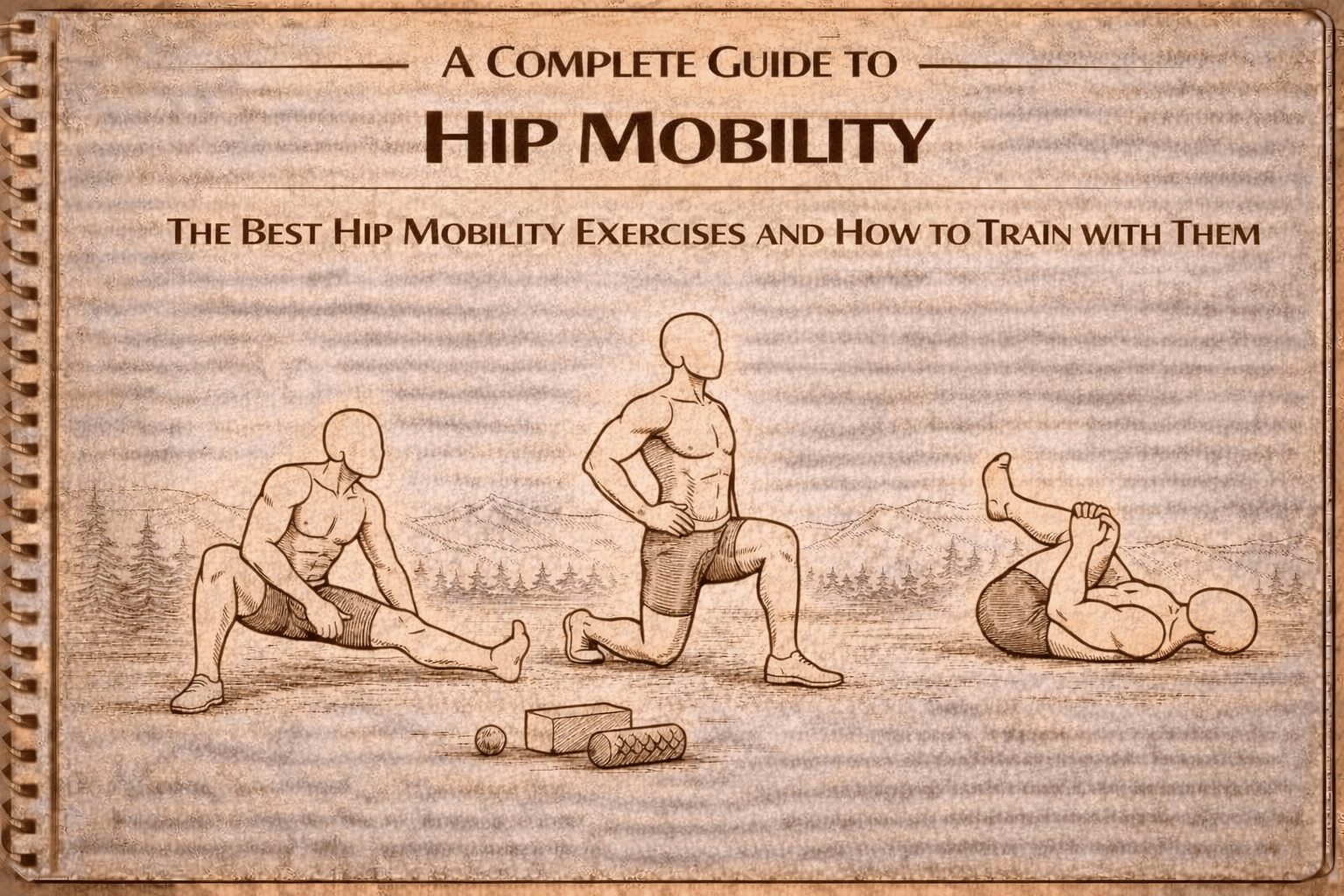
Your tight hips aren’t just uncomfortable, they’re stealing your lower back health. This step-by-step system releases, stretches, and strengthens every movement direction you’ve been ignoring.
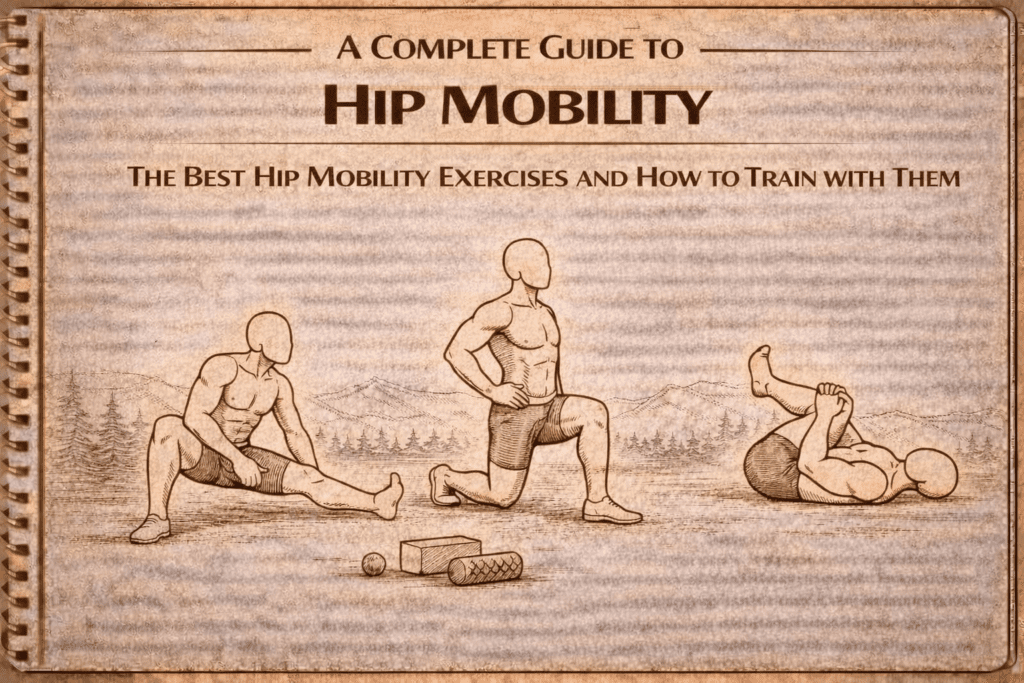
Your hips are the engine of your body, and most people are running on two cylinders instead of six.
The hip is a ball-and-socket joint designed for movement in six different directions: flexion, extension, internal rotation, external rotation, abduction, and adduction. But if you sit most of the day, train only in the sagittal plane (forward and backward), or have been ignoring hip work entirely, you’re probably functional in only two or three of those ranges. The rest? Locked down, compensated for by your lower back, and quietly destroying your posture and performance.
The consequences show up as tight hip flexors, achy lower backs, knee pain that won’t quit, restricted squat depth, or that feeling of being “old” when you get up from a chair. And the fix isn’t just stretching more. It’s following a structured system that releases tight tissue, restores passive range, and then builds strength throughout that new range so it actually sticks.
This guide walks you through the complete hip mobility training system: from tissue release and strategic stretching to loaded strengthening drills that turn temporary flexibility into permanent, usable range of motion.
Table of Contents
Before You Start: When to See a Professional First
If you’re dealing with sharp pain, clicking, locking, or any symptom that feels like something is wrong inside the joint (not just tight or stiff), stop and get it checked.
Hip mobility work is incredibly effective for stiffness, tightness, postural dysfunction, and general immobility. But it’s not a substitute for medical diagnosis when you have an actual injury. Sharp pain during specific movements, a hip that clicks or clunks with certain motions, pain that worsens over time instead of improving, or any kind of radiating pain down the leg are all red flags that you need a physician or physiotherapist to assess the joint before you start loading it or pushing into ranges aggressively.
Red flags that mean see a pro first:
- Sharp, stabbing pain in the hip joint (not muscle soreness)
- Clicking, popping, or locking sensations during movement
- Pain that radiates down the leg or into the groin
- Symptoms that get worse with rest or don’t improve after a week of backing off
- Any trauma or acute injury (fall, collision, sudden onset during a lift)
If you’re cleared or you’re simply dealing with chronic tightness and restricted range from sitting, training imbalances, or years of neglect, you’re in the right place. The system below is designed to systematically unlock your hips and build strength in every direction they’re supposed to move.
How the Hip Mobility System Works: The Three-Phase Approach
Most people approach hip mobility randomly: they stretch when they feel tight, foam roll when something hurts, and wonder why nothing changes long-term.
The issue is that tissue release, stretching, and strength work all serve different purposes, and doing them in the wrong order or skipping steps leaves results on the table. Foam rolling after you’re already warmed up and moving well doesn’t do much. Stretching a muscle that’s full of trigger points and adhesions just pulls on stuck tissue. And trying to build strength in a range you don’t own neurologically is a recipe for compensation and injury.
The system that works follows a logical, progressive sequence that addresses each layer of restriction:
- Phase 1: Release – Use massage, trigger point work, and myofascial tools to break up adhesions, reduce tone in chronically tight muscles, and improve passive range. This is about relief and creating space in the tissue.
- Phase 2: Stretch – Lengthen the muscles around the hip joint using static stretches, loaded stretches, and positional holds. This improves passive range of motion and teaches the nervous system that the new length is safe.
- Phase 3: Strengthen – Build active control, strength, and motor patterns throughout the full range you just unlocked. This is what makes the mobility permanent and functional under load.
Each phase sets up the next. Release makes stretching more effective. Stretching makes strengthening safer and deeper. And strengthening locks in the range so you actually own it instead of borrowing it for 20 minutes after a yoga class.
You don’t have to spend an hour on each phase every day. But the sequence matters, especially when you’re first opening up a restricted joint. A smart session might be five minutes of release, five minutes of stretching, and ten minutes of loaded mobility work. Short, consistent, and structured beats long and random every single time.
Phase 1: Tissue Release Techniques for the Hips (Myofascial and Trigger Point Work)
Tissue release is about reducing muscle tone, breaking up adhesions, and creating slack in chronically shortened muscles so that stretching and movement can actually happen without fighting a wall of tension.
When a muscle is full of trigger points or locked into a shortened position from hours of sitting or repetitive movement patterns, trying to stretch it or strengthen it just pulls on stuck tissue. You get temporary relief at best, and often you’re just moving the restriction around instead of fixing it. Release work using foam rollers, lacrosse balls, and other tools directly targets the tight spots, increases blood flow, calms down overactive neural tone, and gives you room to move.
The key is spending real time on each area (minimum 90 seconds to two minutes per side), breathing through the discomfort, and working the tools slowly instead of just rolling back and forth fast. You’re looking for a release, not just enduring pain. If a spot is extremely tender, that’s usually a sign it needs the work. Sink into it, breathe, and wait for the tone to drop.
Hip Flexor and Psoas Lacrosse Ball Smash (Floor Version)
Lie face down on the floor and place a lacrosse ball just inside (medial to) your front hip bone (ASIS). Sink your body weight into the ball and breathe slowly. This position targets the psoas, one of the deepest and most chronically tight hip flexors in the body, especially in anyone who sits for hours daily. It’s uncomfortable, often intensely so, but it’s also one of the single most productive releases you can do for hip extension range and anterior pelvic tilt correction. Stay on each side for a minimum of two minutes. If you can’t tolerate your full body weight, prop yourself up slightly on your forearms and gradually sink deeper as the muscle releases.
Kettlebell Hip Flexor and Psoas Smash
If the floor version is too much or you want a deeper release in a slightly different position, try the kettlebell smash. Lie on your back with a kettlebell standing upright, and position the handle or the side of the bell into the crease of your hip, right where your thigh meets your torso. Let your leg hang heavy and breathe. The weight of your leg plus the pressure of the kettlebell creates a deep release into the hip flexors and the psoas from a different angle than the floor version. Two to three minutes per side. This one also works extremely well as a pre-workout primer if your hip flexors are locked up.
Glute Smash (Lacrosse Ball or Softball)
Sit on a lacrosse ball or softball (softball is gentler for beginners) and sink your body weight into the thick part of your glute. Move slowly, searching for tender spots, and when you find one, stay there and breathe. The glutes get locked up from sitting, compensating for weak hips, or overworking during training. Releasing them improves hip extension, external rotation, and often takes pressure off the lower back. Spend 90 seconds to two minutes per side. You can also do this standing against a wall if sitting is too intense.
Glute Foam Roll
Sit on a foam roller positioned under one glute, cross that ankle over the opposite knee (figure-four position), and roll slowly from the sit bone up toward the hip. This covers more surface area than the ball and is less intense, making it a good option if you’re new to tissue work or if your glutes are extremely sensitive. It’s also excellent for general maintenance between deeper ball work sessions. One to two minutes per side.
TFL and Lateral Hip Smash (Lacrosse Ball)
The TFL (tensor fasciae latae) is a small but powerful muscle at the very top of the IT band, just forward of the hip on the outside. It’s often the root cause of IT band tightness, lateral knee pain, and restricted hip internal rotation. Lie on your side with a lacrosse ball positioned directly into this spot (you’ll know when you find it) and sink your body weight into it. This is different from general IT band foam rolling. You’re targeting a golf ball-sized muscle with a focused release. Minimum 90 seconds per side. If you’ve been foam rolling your IT band for years with minimal results, this is probably the missing piece.
IT Band and Side of Hip Foam Roll
Lie on your side with a foam roller under your hip and roll from just below the hip bone down toward the knee. The IT band itself is fascia and doesn’t stretch or release the same way a muscle does, but rolling the area reduces tension in the surrounding tissue and feels good after long periods of sitting or lower-body training. This is more of a maintenance move than a corrective one, but it has its place. One to two minutes per side, moving slowly.
Adductor Smash (Inner Thigh)
Tight adductors (inner thigh muscles) are one of the most overlooked limiters of hip mobility. They restrict hip abduction, external rotation, and deep squat depth, and they’re almost never addressed in standard mobility routines. Lie face down with one leg out to the side and a foam roller positioned along the inner thigh. Slowly roll from the groin down toward the knee, pausing on tender spots. For a deeper release, use a barbell instead: sit on the floor with one leg extended to the side and roll the barbell across the inner thigh, using your hands to add pressure. Minimum two minutes per side. You’ll feel this one immediately in your squat depth and your ability to sit into a deep groin stretch.
Piriformis and Deep External Rotator Smash
The piriformis sits underneath the glute and is the primary external rotator of the hip. When it’s tight or locked up, it can create sciatic-like symptoms, deep hip pain, and restricted internal rotation. Sit on a chair or on the floor and place a lacrosse ball into the middle of your glute, closer to the sacrum than the outer hip. Cross the ankle of the side you’re working over the opposite knee (figure-four position) to open up the area and sink into the ball. This release often produces dramatic relief for people dealing with deep hip or “butt” pain that doesn’t respond to stretching. Two to three minutes per side.
Rectus Femoris Smash (Upper Quad and Hip Flexor)
The rectus femoris is the only quadriceps muscle that crosses both the knee and the hip, making it a hip flexor in addition to a knee extensor. Tightness here limits hip extension and contributes to anterior pelvic tilt. Foam roll the front of your thigh from the hip crease down to mid-thigh, spending extra time on the upper portion near the hip. For deeper pressure, use a barbell racked at knee height: drape your thigh over the bar and use your body weight to sink into it. This is uncomfortable but incredibly effective for people who can’t get into a full couch stretch or who feel a pulling sensation in the front of the hip during hip extension work. One to two minutes per side.
Thoracolumbar Fascia and Lower Back Release
The lower back and the hip are functionally one system. Tight thoracolumbar fascia (the connective tissue along the lower back) limits hip extension and lumbar mobility simultaneously, and most hip tightness has a lower back component. Use a double lacrosse ball taped together (called a “peanut”) or a foam roller positioned horizontally across your lower back. Lie on your back with knees bent and slowly roll up and down along the muscles beside the spine (not directly on the spine). This decompresses the hip-lumbar interface and often creates an immediate increase in hip extension range. One to two minutes, moving slowly and breathing through tender spots.
Do you need to do all of these every day? No. But spending five to ten minutes on the areas that are tightest for you (hip flexors, adductors, and glutes for most people) before stretching or training will make everything else in this guide work better.
Phase 2: Stretching to Improve Passive Range of Motion
Once you’ve released the tissue, stretching becomes far more effective because you’re lengthening muscle instead of pulling on adhesions and trigger points.
The goal of this phase is to improve passive range of motion (how far the joint can move when you’re relaxed or assisted by gravity, body weight, or an external force) and teach your nervous system that the new length is safe. This is where most people live, and it’s valuable, but it’s not enough on its own. Passive range without active control is just borrowed flexibility. You’ll feel great for 20 minutes and then revert right back to your baseline tightness because your brain doesn’t trust the range and your muscles can’t produce force in it.
That said, stretching is a critical step. It creates space, reduces the sensation of tightness, and primes the nervous system for the loaded mobility work that comes next. The key is holding stretches long enough (60 to 90 seconds minimum per side) and breathing through them instead of forcing into pain. You’re looking for a strong stretch sensation, not sharp pain or joint discomfort.
Couch Stretch
Kneel in front of a couch or bench with one shin vertical against the couch and the opposite foot flat on the floor in front of you (like a lunge position). Keep your torso upright, squeeze the glute of the rear leg, and tuck your tailbone under (posterior pelvic tilt). This is the single best stretch for the hip flexors and the rectus femoris, and it directly addresses the shortened position caused by sitting. Most people feel this immediately in the front of the hip. If you’re new to the stretch, you might need to lean your hands on your front knee for balance. As you improve, work toward a fully upright torso and even raising your arms overhead. Hold for two to three minutes per side. Yes, minutes. This is a long hold stretch, and the magic happens after the first 60 seconds when your nervous system starts to relax into the position.
Pigeon Pose
From a hands-and-knees position, bring one knee forward and angle it out toward the same-side hand, letting your shin rest on the floor at whatever angle is accessible. Extend the opposite leg straight back and sink your hips toward the floor. This stretch targets the hip external rotators (especially the piriformis) and the glutes. It’s one of the most popular hip stretches in yoga for good reason: it hits a range most people never access and feels incredible once you relax into it. If your hips are tight, prop your front-side hip up on a yoga block or folded towel so you’re not forcing into end range. Hold for 90 seconds to two minutes per side, breathing deeply and sinking deeper as the muscle releases.
Seated Figure-Four Stretch
Sit on a chair or bench and cross one ankle over the opposite knee (figure-four position). Sit up tall and gently press down on the knee of the crossed leg. For a deeper stretch, hinge forward at the hips while keeping your spine neutral. This stretches the external rotators and the glutes in a much more accessible position than pigeon, making it perfect for beginners or for use during the workday. Hold for 60 to 90 seconds per side. You can also do this lying on your back with the non-working foot flat on the floor and pulling the crossed knee toward your opposite shoulder for a supine variation.
90/90 Stretch
Sit on the floor with both legs bent at 90 degrees: one leg in front of you with the knee pointing forward and the shin parallel to your body, and the other leg behind you with the knee pointing to the side. Sit up tall. This position simultaneously stretches internal rotation on the rear leg and external rotation on the front leg. To deepen the stretch, lean forward over your front shin or rotate your torso toward the back leg. This is one of the best stretches for exploring rotational range, and it sets up the loaded 90/90 transitions perfectly. Hold for 60 to 90 seconds, then switch sides. If sitting upright is difficult, sit on a yoga block or folded towel to elevate your hips.
Frog Stretch (Feet Against Wall)
Kneel on a pad or mat and spread your knees as wide as possible while keeping your shins parallel and your feet flexed against a wall (toes pointing out to the sides). Sink your hips back toward your heels and let your chest drop toward the floor. This is an intense adductor and groin stretch, and it’s one of the few stretches that directly targets hip abduction range. Start conservatively (your knees don’t need to be super wide on day one) and gradually work deeper over weeks. Hold for two to three minutes, breathing through the discomfort and letting gravity do the work. If your hips are extremely tight, place a bolster or pillow under your torso so you’re not forcing into the floor.
Sitting Groin Stretch with Weight on Knees
Sit on the floor with the soles of your feet together and your knees falling out to the sides (butterfly position). Sit up tall and gently press down on your knees with your hands or elbows, or place a light weight plate on each thigh for a passive load. This stretches the adductors and the inner thigh, and it’s much less intense than the frog stretch, making it a good daily maintenance stretch. Hold for 90 seconds to two minutes, focusing on sitting tall rather than rounding your back to pull yourself forward.
Deep Squat Hold
Sit into the bottom of a squat with your feet flat (or as flat as possible), knees pushed out, and torso upright. You can hold onto a pole, a doorframe, or the handles of a suspension trainer for balance, or hold a light kettlebell at chest height as a counterbalance. This position combines hip flexion, ankle dorsiflexion, and thoracic extension, and it’s one of the most functional stretches you can do because it’s also a foundational human movement pattern. Hold for two to three minutes, breathing and shifting your weight slightly side to side to explore the range. If your heels come up, place small plates or a folded mat under them until your ankle mobility improves.
Cossack Squat Hold
Stand with your feet wide, shift your weight to one side, and sink into a deep side lunge (one leg bent, the other leg straight with toes pointing up). Keep your torso upright and your planted foot flat. This stretches the adductors of the straight leg while also loading the hip, knee, and ankle of the bent leg. It’s a hybrid stretch and mobility drill, and it’s one of the best movements for lateral hip range. Hold each side for 30 to 60 seconds, or alternate slowly back and forth as a dynamic stretch.
Hip Airplane (Stretch and Exploration)
Stand on one leg, hinge forward at the hip, and rotate your pelvis so one side rises and the other side drops, exploring both internal and external rotation in a loaded, functional position. This isn’t a static hold; it’s an active exploration of rotational range while balancing. Move slowly and control the rotation instead of swinging. This drill is fantastic for identifying where your rotational restrictions are and for teaching your nervous system to access rotation while standing and loaded. Three to five slow rotations per side.
Active Straight Leg Raise (ASLR)
Lie on your back with both legs straight. Actively raise one leg as high as possible while keeping the other leg flat on the floor and your lower back pressed down. This tests and trains hip flexion mobility with active control, and it’s a key assessment drill from the Functional Movement Screen (FMS). Most people can passively pull their leg higher than they can actively raise it, which reveals a gap between passive flexibility and active control. This gap is what you’re working to close. Three to five reps per side, holding the top for two to three seconds.
Supine Hip Internal Rotation Stretch (Windshield Wipers)
Lie on your back with knees bent and feet flat on the floor. Let both knees fall to one side like windshield wipers, keeping both shoulders flat on the ground. This stretches the hip external rotators on the side the knees fall toward and the hip internal rotators on the opposite side. Internal rotation is the most neglected direction of hip mobility, and this simple drill addresses it in a safe, accessible position. Hold each side for 60 to 90 seconds.
Kneeling Adductor Stretch (Side Lunge Hold)
Kneel on one knee with the other leg extended straight out to the side, toes pointing forward. Shift your weight over the kneeling leg and sink into the stretch. This is deeper and more sustainable than a standing side lunge, and it targets the adductors in a slightly different position than the frog stretch or the Cossack squat. Hold for 60 to 90 seconds per side.
Prone Hip Extension Stretch (Sphinx or Cobra)
Lie face down and prop yourself up on your forearms (sphinx position) or hands (cobra position), letting your hips sag toward the floor. This stretches the hip flexors in a bilateral, passive position and also decompresses the lower back. It’s less intense than the couch stretch but hits a similar range, making it a good option for daily maintenance or for people just starting to address hip flexor tightness. Hold for one to two minutes, breathing deeply and letting gravity do the work.
Standing Hip Flexor Stretch with Posterior Pelvic Tilt
Step into a lunge position with your rear knee on the ground (or hovering just above it). Instead of just sinking forward, actively tuck your tailbone under (posterior pelvic tilt), brace your core, and squeeze the glute of the rear leg. This small adjustment dramatically increases the depth of the psoas stretch and prevents you from dumping into an anterior pelvic tilt, which actually reduces the effectiveness of the stretch. Hold for 60 to 90 seconds per side. This is the version of the hip flexor stretch that actually works.
Butterfly Stretch (Seated or Supine)
Sit or lie on your back with the soles of your feet together and your knees falling out to the sides. In the seated version, you can gently press down on your knees or lean forward for a deeper stretch. In the supine version, gravity does the work and it’s more passive. This targets the adductors and hip external rotators in a different plane than most other stretches. Hold for 90 seconds to two minutes.
Stretching is where most people stop, and that’s why their hips feel good for an hour and then go right back to tight. The next phase is what makes the difference permanent.
Phase 3: Build Strength and Active Control Throughout Full Range
Passive flexibility means nothing if you can’t control it, load it, and use it under tension.
This is the phase that separates people who feel mobile in their living room from people who are actually mobile in the gym, on the field, or in daily life. Strengthening drills teach your nervous system to own the range you’ve unlocked, build stability in positions that used to feel unstable, and turn temporary flexibility into permanent, functional mobility. If you skip this phase, you’re just renting range instead of owning it.
The drills below combine exploration, control, and load. Some are bodyweight, some use bands or kettlebells, and some are classic strength movements performed with a mobility focus. The goal is to move slowly, prioritize range and control over weight, and challenge your body to produce force in positions it’s not used to.
Hip CARs (Controlled Articular Rotations)
What it is: Standing on one leg or in a quadruped position, draw the largest possible circle with your knee, moving through every plane of hip motion (flexion, abduction, external rotation, extension, adduction, internal rotation) with maximum control and zero compensation from your lower back or torso.
Why it matters: CARs are the gold standard for joint health and neurological ownership of range. They teach your brain to access every direction your hip is capable of moving, and they immediately reveal where you have gaps in control or mobility. Most people discover they can move smoothly through some parts of the circle and lose control or compensate through others. That’s the information you need.
How to do it: Stand on one leg with a slight bend in the knee. Lift the opposite knee and begin rotating it in the largest circle you can make while keeping your torso completely still. Move slowly and deliberately. Complete three to five circles in one direction, then reverse. Do this daily. It takes three minutes and will transform your hip function over time.
90/90 Transitions (Left to Right)
What it is: Sit on the floor in a 90/90 position (one leg in front, one behind, both at 90 degrees) and transition from one side to the other by lifting and rotating your legs, keeping your torso upright.
Why it matters: This drill combines hip internal and external rotation, core control, and positional strength in a movement pattern that’s completely foreign to most people. It’s awkward at first, which is exactly the point. Your brain is learning to coordinate rotation in both hips simultaneously while maintaining spinal position.
Progressions: Start with basic transitions (just moving from side to side). Progress to leaning forward over your front shin at the bottom of each rep. Then add a couch stretch on the rear leg (shin vertical against a wall behind you), transitioning into the stretch and then back down. Finally, add torso rotation by reaching one arm to the sky as you lean forward.
Three sets of six to eight transitions (three to four per side). Move slowly and prioritize control.
Hip Airplane (Loaded and Active)
What it is: Standing on one leg, hinge forward at the hip and actively rotate your pelvis so one side rises and the other drops, exploring both internal and external rotation while balancing.
Why it matters: This is one of the single best drills for building active hip rotational control in a functional, loaded position. It strengthens the hip stabilizers, challenges your balance, and forces your brain to differentiate between hip rotation and spinal rotation.
How to do it: Stand on one leg, hinge forward to about 45 degrees, and keep your torso still. Slowly rotate your pelvis through its full range, allowing the floating leg to rotate with your pelvis. Move slowly and avoid twisting your spine. Three sets of eight to ten controlled rotations per side.
Squat to Stand (World’s Greatest Stretch)
What it is: From standing, hinge forward and grab your toes, sink into a deep squat, lift one arm toward the sky (thoracic rotation), return the hand to the floor, stand up, and repeat on the other side.
Why it matters: This is one of the best total-body mobility drills available. It combines hip flexion, ankle dorsiflexion, thoracic rotation, and hamstring mobility in one fluid, dynamic movement. It’s an incredible warm-up drill and a daily mobility practice that takes 60 seconds and touches almost every major restriction pattern in the body.
How to do it: Perform six to ten total reps (three to five per side), moving smoothly and under control. This isn’t a stretch hold; it’s a flowing movement.
Deep Squat Prying
What it is: Sit in the bottom of a deep squat and use your elbows to push your knees further out while shifting your weight side to side and exploring rotational range.
Why it matters: This is an active, exploratory version of the static deep squat hold. You’re not just sitting there; you’re actively prying open more range, testing your limits, and teaching your nervous system that this position is safe and strong.
How to do it: Hold a light kettlebell at chest height for counterbalance if needed. Sink into the bottom of a squat, place your elbows inside your knees, and push out. Shift your weight to the right, then the left. Rotate your torso slightly. Explore the position for 60 to 90 seconds. This is one of the best drills for improving squat depth and hip internal rotation simultaneously.
Cossack Squat (Dynamic, Side to Side)
What it is: From a wide stance, shift your weight to one side and sink into a deep side lunge, then smoothly transition to the other side without standing up.
Why it matters: The Cossack squat is one of the single best hip mobility exercises because it combines adductor length, single-leg squat strength, and lateral hip mobility all in one movement. It’s a stretch, a strength drill, and a coordination challenge.
How to do it: Start with bodyweight and move slowly. As you improve, hold a light kettlebell at chest height or a dumbbell in the goblet position. Two to three sets of five to eight reps per side (ten to sixteen total transitions).
Hip Flexor March (Standing Band Drive)
What it is: Loop a resistance band around your ankle (anchored behind you) and stand tall. Drive your knee up and forward against the band, marching in place.
Why it matters: Most hip flexor work focuses on lengthening the hip flexors (couch stretch, psoas release). This drill strengthens them actively in their shortened position, which is just as important for long-term hip health and function. Strong hip flexors in flexion improve sprinting, kicking, and knee drive mechanics, and they balance out the posterior chain dominance most people have.
How to do it: Three sets of ten to twelve reps per side, focusing on driving the knee high and controlling the descent. Use a moderate resistance band.
Hip Abduction with Band (Clamshells and Standing)
What it is: Lie on your side with a band around your knees (clamshell position) and open your top knee while keeping your feet together. Or stand with a band around your ankles and lift one leg out to the side.
Why it matters: The gluteus medius is the primary hip abductor and one of the most critical muscles for hip stability, knee health, and preventing the hip drop and knee valgus (knees caving in) that destroys joints over time. It’s also one of the weakest muscles in most people, especially those with knee or hip pain.
How to do it: Clamshells: three sets of 15 to 20 reps per side. Standing abduction: three sets of 12 to 15 reps per side. Move slowly, squeeze at the top, and control the descent. This isn’t about speed; it’s about activation and control.
Single-Leg Romanian Deadlift (SL-RDL)
What it is: Stand on one leg, hinge at the hip while keeping your spine neutral, and reach toward the floor with the opposite hand while your non-working leg extends behind you.
Why it matters: The SL-RDL combines hip extension strength, hamstring lengthening under load, and single-leg hip stability all in one movement. It’s one of the highest-value exercises for hip health, posterior chain strength, and mobility combined. It also directly translates to running, jumping, and any single-leg athletic movement.
How to do it: Start with bodyweight, then progress to holding a light kettlebell or dumbbell in the hand opposite your working leg. Two to three sets of eight to ten reps per side. Focus on hinging at the hip (not rounding your back) and reaching the deepest range you can control.
Goblet Squat with Pause
What it is: Hold a kettlebell or dumbbell at chest height, descend into a full squat, and pause at the bottom for three to five seconds before standing.
Why it matters: The goblet squat is the perfect bridge between the passive deep squat hold (stretch) and loaded back squatting (strength). The counterbalance of the weight allows a more upright torso and deeper hip flexion, and the pause at the bottom builds strength and control in the exact position most people struggle with.
How to do it: Three to four sets of six to eight reps with a three-to-five-second pause at the bottom. Use a moderate weight that allows you to sink deep and stay upright. This is a mobility drill as much as it is a strength drill.
Hip Thrust or Glute Bridge (Full Extension Focus)
What it is: Lie on your back with knees bent and feet flat (glute bridge) or with your upper back on a bench and feet flat on the floor (hip thrust). Drive through your heels and extend your hips fully, squeezing your glutes at the top.
Why it matters: Full hip extension is one of the most undertrained ranges in modern life. Most people never reach true terminal hip extension because their hip flexors are too tight and their glutes are too weak. Glute bridges and hip thrusts build strength at end-range hip extension, which directly complements the couch stretch and other hip flexor work. This is how you lock in the range you’ve been stretching.
How to do it: Three sets of 12 to 15 reps, pausing for two seconds at the top of each rep and squeezing your glutes hard. Progress by adding a barbell, a band around your knees, or elevating your feet.
Half-Kneeling Hip Flexor Lift-Off (PAILs/RAILs)
What it is: Get into a half-kneeling hip flexor stretch position (rear knee down, front foot flat). After holding the stretch passively for 60 seconds, isometrically contract the hip flexor of your rear leg (try to lift your rear knee off the floor without actually moving) for ten seconds. Relax and sink deeper into the stretch.
Why it matters: This is the PAILs and RAILs technique (Progressive and Regressive Angular Isometric Loading) from the Functional Range Conditioning (FRC) system. It’s one of the most effective methods for converting passive range into active, usable range. The isometric contraction wakes up the nervous system and teaches your brain that you can produce force in this lengthened position, which makes the range stick.
How to do it: Hold the stretch for 60 seconds, contract for ten seconds (pushing your rear knee into the floor as hard as you can), relax for five seconds, then sink deeper and hold for another 30 seconds. One to two rounds per side. This is advanced, but it’s incredibly effective.
These drills are what turn the stretching and release work into actual, permanent, functional mobility. You don’t need to do all of them in every session, but pick three to five per workout and rotate through them over the week. Prioritize the ones that address your biggest restrictions.
The Six Directions Your Hips Need to Move (And Why Most People Only Use Three)
The hip joint is designed for movement in six distinct directions, but modern life, repetitive training, and sitting lock most people into only sagittal plane motion (forward and backward).
Understanding these six directions helps you identify where your restrictions are and why certain movements feel impossible or uncomfortable. When you know what you’re missing, you can target it directly instead of guessing.
- Flexion: Bringing your knee toward your chest (think squat, sitting, knee drive). Most people have decent flexion range but lack strength and control at the deepest ranges.
- Extension: Driving your leg behind you (sprinting, standing up from a chair, deadlifts). This is the most restricted range for people who sit. Tight hip flexors block extension, forcing the lower back to compensate.
- Abduction: Moving your leg out to the side (side lunge, lateral movement, standing on one leg without hip drop). Weak abductors (glute medius) cause knee valgus and hip instability.
- Adduction: Bringing your leg across your body (crossing your legs, side plank, single-leg balance). Tight adductors limit squat depth and hip abduction range.
- Internal Rotation: Rotating your thigh inward (think knees together, pigeon-toed position). This is the most neglected direction and the one most directly linked to hip impingement and IT band issues.
- External Rotation: Rotating your thigh outward (think knees apart, duck-footed position). Most people train this more than internal rotation, but it’s still often limited.
If you’re missing range or strength in any of these directions, your body compensates by moving somewhere else (usually your lower back), which leads to pain, dysfunction, and injury over time. The goal of a complete hip mobility program is to restore all six directions, not just the ones that feel good or easy.
Common Mistakes That Kill Your Hip Mobility Progress
Even with the right drills, most people sabotage their progress by making a handful of predictable mistakes.
Avoiding these errors will save you months of frustration and get you results faster than adding more exercises or stretching longer ever could.
Stretching without releasing first
Trying to stretch a muscle full of trigger points and adhesions is like trying to stretch a rope with knots in it. You’re just pulling on the knots. Spend five minutes releasing the tissue before you stretch and you’ll get twice the results in half the time.
Only working passive range and never building strength
Passive flexibility without active control is temporary. Your nervous system doesn’t trust range it can’t produce force in, so it reverts back to baseline as soon as you stop stretching. If you want permanent mobility, you have to strengthen the range you unlock. Every stretch should eventually have a corresponding loaded drill.
Skipping the ranges that feel bad
The positions that feel the worst are usually the ones you need the most. If you avoid deep internal rotation because it feels awkward or skip adductor work because it’s uncomfortable, you’ll never fix the restriction. Lean into the stuff that sucks.
Forcing into pain instead of working at the edge
There’s a difference between a strong stretch sensation and sharp pain. One is productive; the other is your body telling you to back off. Work at the edge of discomfort, breathe, and let the range come to you. Forcing past pain creates guarding, compensation, and often makes the restriction worse.
Not spending enough time in each position
Holding a stretch for 15 seconds does almost nothing. The nervous system needs time to downregulate and allow the muscle to lengthen. Minimum holds are 60 to 90 seconds for stretches and 90 seconds to two minutes for release work. Longer is often better, especially for chronically tight areas like the hip flexors and adductors.
Doing random mobility work instead of following a system
Stretching whatever feels tight that day or doing a random YouTube mobility routine might feel good in the moment, but it doesn’t create lasting change. Follow a structured progression: release, stretch, strengthen. Address all six directions of motion. Track what you’re doing and how your range is improving. Systems beat randomness every time.
How to Program Hip Mobility Work Into Your Week
You don’t need an hour-long mobility session every day, but you do need consistency and structure.
Here’s how to fit hip mobility work into your training week in a way that’s realistic, sustainable, and effective.
Daily Minimum (5 to 10 minutes):
- Hip CARs: three to five slow circles per direction per side
- Deep squat hold: two minutes, assisted or with counterbalance
- One release drill for your tightest area (hip flexor smash, adductor roll, glute smash)
This is your baseline. Even on rest days, even when you’re busy, this ten-minute routine maintains the range you’ve built and keeps your hips healthy.
Full Hip Mobility Session (20 to 30 minutes, two to three times per week):
- Release (5 to 8 minutes): Hip flexor smash, adductor smash, glute smash, TFL smash. Rotate focus areas based on what’s tight that week.
- Stretch (8 to 10 minutes): Couch stretch, pigeon pose, 90/90, frog stretch, Cossack hold. Pick three to four stretches and hold each for 90 seconds to two minutes per side.
- Strengthen (8 to 10 minutes): 90/90 transitions, hip airplanes, Cossack squats (dynamic), SL-RDL, goblet squat with pause. Three sets of six to ten reps for loaded drills; three to five reps per side for exploratory drills like CARs and hip airplanes.
This session hits all three phases and all six directions of motion. Do this two to three times per week and you’ll see dramatic improvements in four to six weeks.
Pre-Workout Primer (5 to 8 minutes before lower-body training):
- Hip flexor smash or couch stretch: two minutes
- Hip CARs: two to three circles per direction per side
- Goblet squat with pause: two sets of five reps
- Cossack squat or deep squat prying: one set of six to eight reps
This wakes up your hips, clears restrictions, and primes your nervous system for loaded training. You’ll squat deeper, move better, and reduce injury risk.
Post-Workout or Evening Wind-Down (5 to 10 minutes):
- Couch stretch: two to three minutes per side
- Pigeon pose or figure-four stretch: 90 seconds per side
- Supine hip internal rotation (windshield wipers): 60 seconds per side
This is low-intensity, mostly passive work that helps you recover, reduces soreness, and reinforces the range you trained earlier.
You don’t need to do everything every day. Pick the structure that fits your schedule and your goals, and stay consistent. Mobility is built through repetition and time, not intensity and suffering.
Why Hip Mobility Fixes More Than Just Your Hips
Restricted hip mobility doesn’t stay in your hips.
When your hips can’t move through their full range, your body compensates by moving somewhere else, and that compensation creates a cascade of dysfunction that shows up as pain, stiffness, and injury in places that seem completely unrelated.
Lower back pain: When your hips lose extension (tight hip flexors), your lower back hyperextends to compensate. When your hips lose flexion (tight glutes, hamstrings), your lower back rounds excessively during squats and deadlifts. The lumbar spine and the hip move as a system (lumbo-pelvic rhythm), and when the hip stops pulling its weight, the lower back breaks down. Improving hip mobility is one of the most effective interventions for chronic lower back pain.
Knee pain: Restricted hip internal rotation and weak hip abductors (glute medius) cause the knee to collapse inward (valgus) during squatting, running, and landing. This loads the knee joint incorrectly and leads to patellofemoral pain, IT band syndrome, and eventually meniscus or ligament issues. Fix the hip and the knee often fixes itself.
Ankle restrictions: When your hips can’t flex deeply, your body tries to get squat depth from your ankles instead. This overloads the ankle joint and often leads to compensations up the chain. Improving hip flexion range reduces the demand on ankle dorsiflexion and often unlocks better squat mechanics immediately.
Poor posture and anterior pelvic tilt: Tight hip flexors pull the pelvis forward (anterior pelvic tilt), which arches the lower back, pushes the belly forward, and compresses the lumbar spine. Weak glutes fail to counterbalance this pull. The result is the classic “duck butt” posture that’s epidemic in people who sit all day. Releasing the hip flexors, strengthening the glutes, and training full hip extension corrects this pattern and often eliminates the chronic lower back tightness and discomfort that comes with it.
Reduced athletic performance: Hip mobility is the foundation of force production in almost every athletic movement. Sprinting, jumping, cutting, kicking, throwing (the power comes from the hips), and lifting all require full hip range and the ability to produce force at end ranges. If your hips are locked up, you’re leaving performance on the table.
Improving your hip mobility doesn’t just make your hips feel better. It makes your entire kinetic chain function better, reduces pain in distant joints, improves your posture, and unlocks strength and performance you didn’t know you were missing.
Your hips are the engine. When the engine runs clean, everything else works better. When the engine is clogged and restricted, everything else compensates and eventually breaks.
This system gives you the tools to clean the engine, restore full function, and build strength in every direction your hips are designed to move. Five to ten minutes a day of consistent work will change how your body feels and performs more than almost any other single intervention you can make. Start with the daily minimum, add a full session twice a week, and watch your hips (and everything connected to them) transform over the next month.


ABOUT THE AUTHOR
Carlos Grider is a former U.S. Marine, CrossFit Level 1 trainer, certified personal trainer, and the creator of Forge the Flow. After nearly a decade supporting combat operations and special operations in austere environments — and another decade traveling across 65+ countries as a nomad and adventure athlete — Carlos distilled everything he learned about staying strong, capable, and resilient without a gym into the Forge the Flow training system. He has trekked solo to Everest Base Camp, surfed Bali through the pandemic, trained Muay Thai in Thailand, and run self-guided marathons across four continents — all maintained on minimalist training built for real life. He writes about the fitness methods that actually travel.
Click here to learn more about Carlos's story.